Labour’s Inclusive Ownership Funds Will Be Fine
British companies grant shares to their executives all the time. But now that Jeremy Corbyn’s Labour is planning to require them to grant shares to ordinary workers, the Financial Times is warning of disaster.
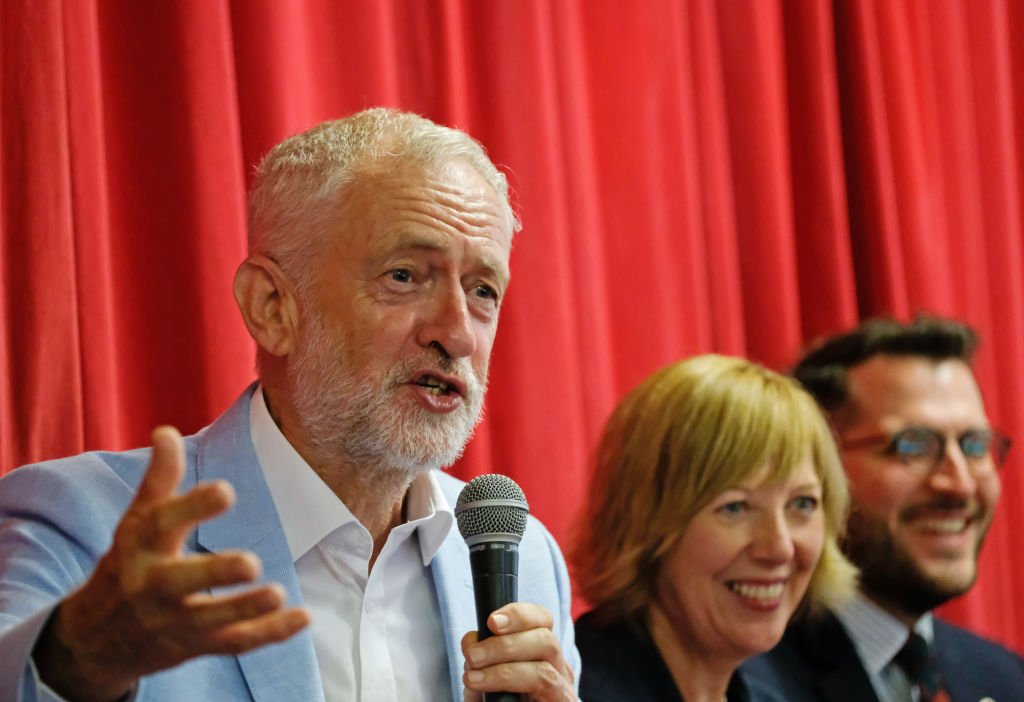
Jeremy Corbyn addresses audience members during a campaign day at the Alive and Kicking Project building to voice opposition against Boris Johnson and the UK government proroguing Parliament on August 31, 2019 in Glasgow, United Kingdom.(Ian Forsyth / Getty Images)
The Financial Times published an alarmist front-page story about Labour’s Inclusive Ownership Funds (IOF) proposal over the weekend. The headline of the story is that “UK’s Labour would cost companies £300bn by shifting shares to staff.” The paper then goes on to quote some right-wingers saying that this will be devastating in various ways. But in reality, the proposal, if implemented, should be fine.
Labour’s IOF proposal is pretty simple: every year, for the next ten years, large British companies will be required to issue stock equal to 1 percent of their ownership to trusts established for each company. Those trusts will operate on behalf of the workers in each company, meaning that the workers will be able to vote the shares in shareholder matters and receive up to £500 a year in dividends from the shares (with the surplus above £500 flowing to the government). The IOFs are a twist on the “funds socialism” approach to socializing ownership of capital, which was popularized by Rudolf Meidner in 1970s Sweden.
The Financial Times determines that this proposal would “cost companies £300bn” using some rough calculations that say the market cap of large British companies is £3 trillion, and 10 percent of that is £300bn: