What If We Really Are Alone in the Universe?
The recent “cosmic realist” trend in hard sci-fi — expressed most severely in James Gray’s Ad Astra — comes at an existentially staggering moment for our relationship to both the planet and the cosmos.
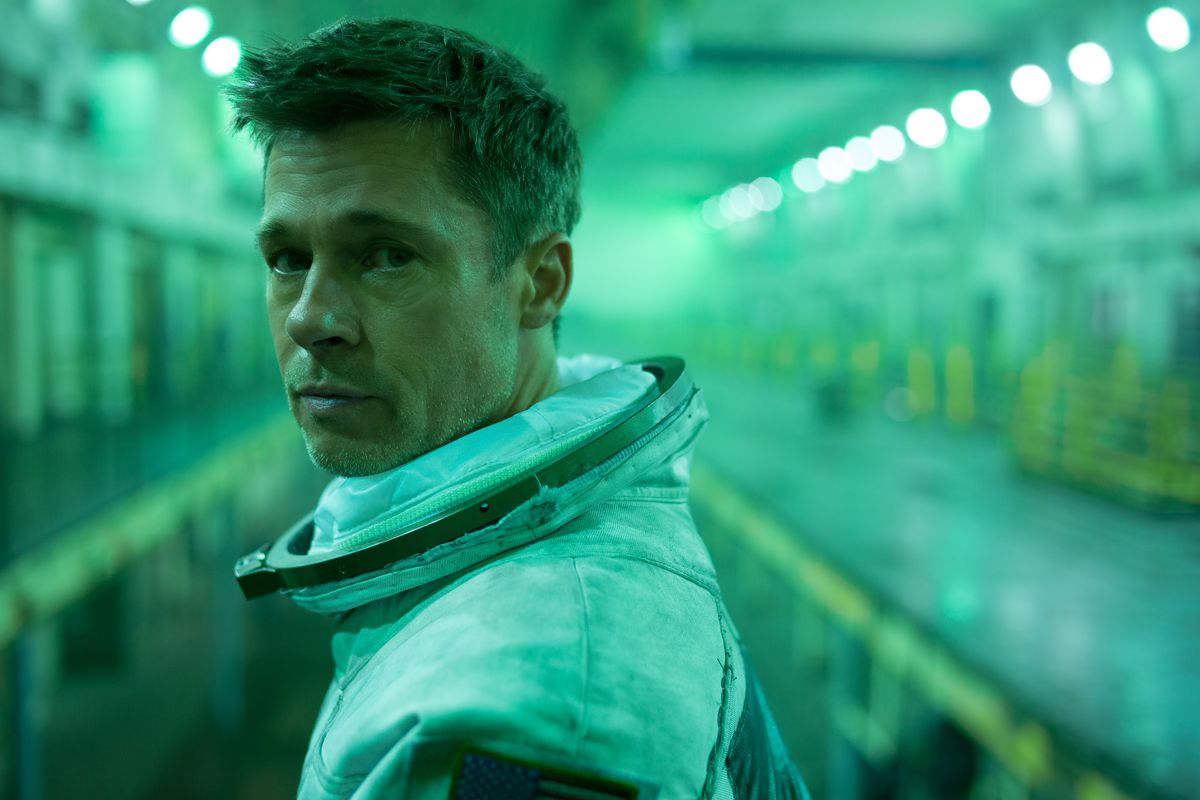
Brad Pitt as Major Roy McBride in James Gray’s Ad Astra. (Francois Duhamel / Twentieth Century Fox)
“Two possibilities exist: Either we are alone in the universe or we are not,” according to Arthur C. Clarke, the author of 2001: A Space Odyssey. “Both are equally terrifying.”
Much science fiction of the last century has assumed the second of Clarke’s terrifying possibilities, that we are not alone — that the cosmos is teeming not just with life, but with intelligent life. The primary questions this literature asked, in hundreds of different ways, were those such as: What would extraterrestrial intelligence be like? How would we recognize it? What would be its response to us? What would be our response to it?
Ostensibly about little green men, these were nevertheless profound questions answered in the pages of cheap paperbacks or by screen actors suited up in wobbly rubber masks. The questions were as serious as any asked by the authors of more respectable literary fiction. They reflected some of the deepest uncertainties that have troubled humanity since our first days on the African savannah, staring up at the great river of stars of the Milky Way: Why are we here? Where do we come from? And, above all: What is it to be a human? For us to ask what an alien soul would be like requires at least an assumption of what a human soul is like.