Medicare Turns Fifty-Four Today. We Need to Defend and Expand It
Fifty-four years ago today, Medicare became the law of the land. The program has been massively successful despite continued efforts to destroy it. While defending Medicare, our next step is clear: Medicare for All.
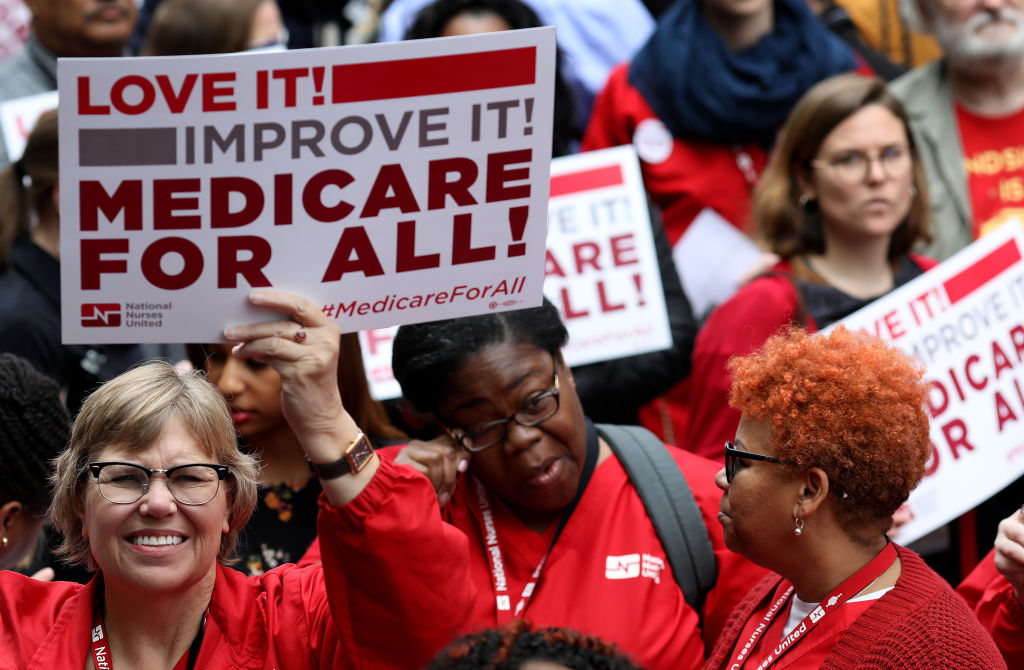
Protesters supporting Medicare for All hold a rally outside PhRMA headquarters April 29, 2019 in Washington, DC.Win McNamee / Getty
On July 30, 1965, Medicare was signed into law. In eleven months, 19 million Americans were automatically enrolled, half of whom were previously uninsured. And within that same transition period — as a direct result of the policy — every segregated hospital in the South took down their “Whites only” signs, integrating their services for the first time.
Medicare came in three parts: a universal hospital plan for the elderly (part A), voluntary doctor insurance for the elderly (part B), and a means-tested health care plan for the poor (Medicaid). At the age of sixty-five, virtually all Americans would become eligible for Medicare. Echoing the debut of Britain’s National Health Service, Lyndon B. Johnson framed Medicare “not as an act of charity, but as the insured right of a senior citizen.”
On its birthday, we must fiercely and proudly defend Medicare, while recognizing that its protection relies on expanding it to all. Doing so — achieving Medicare for All — means providing comprehensive reproductive health care, including abortion. It means providing health care to all residents, regardless of immigration status. And it means creating a system that covers everyone equally, without means-testing.