“The World Is Divided in Two”
- Cole Stangler
The rise of the far right in post-industrial France has led many to declare the end of the old class politics. For CGT union leader Philippe Martinez, the battle isn’t over — organized labor just needs to adapt to new forms of employment.
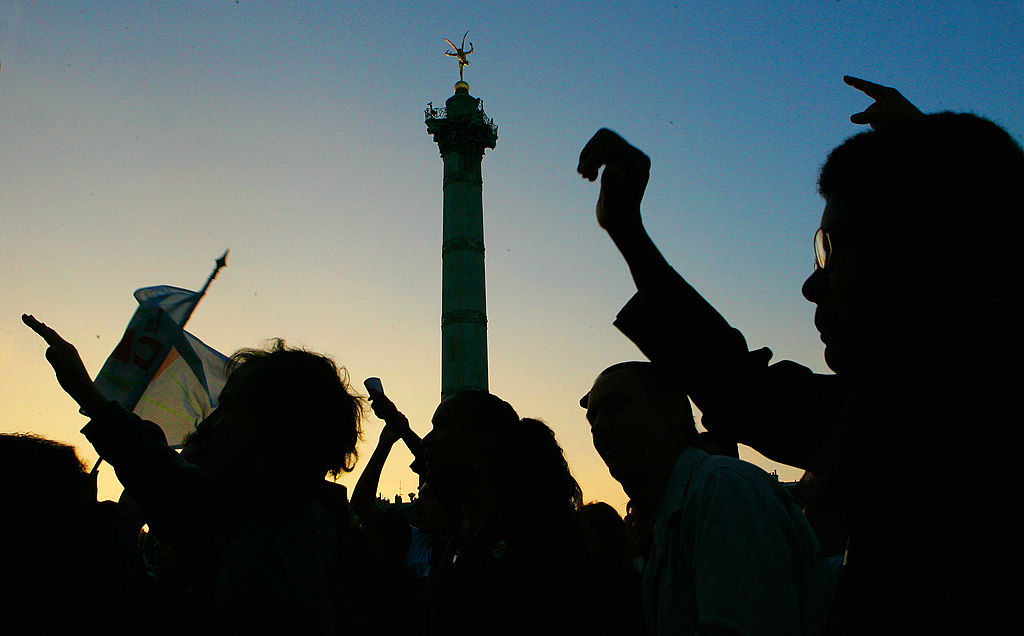
Protestors gather at Place de la Bastille in Paris against a proposed raise in the retirement age in 2010. The CGT endorsed and participated in the protests. Franck Prevel / Getty Image
Philippe Martinez is the general secretary of the General Confederation of Labor (CGT), one of France’s two largest labor confederations and the most popular in the public sector. The son of Spanish immigrants, Martinez began his career as a technician at Renault. He was first elected as head of the CGT in 2015, winning re-election to another four-year term earlier this month in Dijon.
Since its foundation in 1895, the CGT has played a pivotal role in organizing workers in France. The confederation has also helped win the country’s fundamental labor rights through collective action, from strikes under the Popular Front in 1936 and its support for the Resistance to May 1968 and the public-sector work stoppages of 1995. Long linked to the French Communist Party, the CGT no longer maintains formal ties to political parties. The confederation has also struggled in recent years, losing support in the private sector and failing to defeat a series of government reforms through strikes and protests.
To get a closer look at the state of organized labor in France, Jacobin’s Cole Stangler spoke with Philippe Martinez at his office in Montreuil, just outside of Paris. This interview has been translated from French.