Rural France in Revolt
The gilets jaunes have put the social ills of rural France at the heart of public debate. These areas aren't "backward," they're suffering from decades of attacks on social welfare and living conditions.
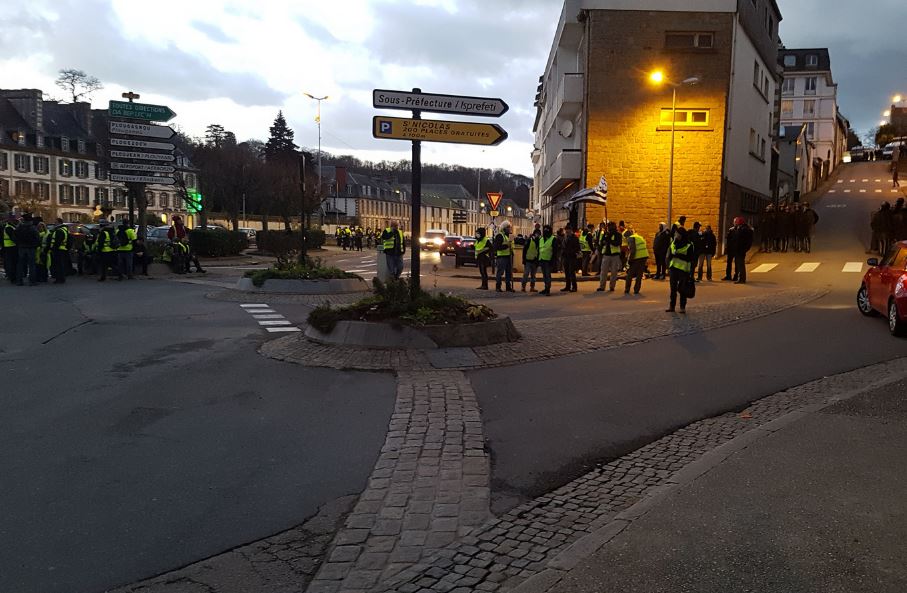
Gilets jaunes protesters in Morlaix, France in February 2019. malkovitch / Flickr
Ever since the movement first burst on the scene on November 17, France’s political and intellectual debate has continued to revolve around the gilets jaunes. President Emmanuel Macron’s first concessions, abolishing a fuel tax and raising benefits for the lowest paid, failed to put a stop to the protests, and the executive is still struggling to get a handle on the crisis. Although city-center marches in recent weeks drew fewer demonstrators than we saw in December, there is continuing defiance, expressed at the countless roundabouts occupied by protesters despite the chill.
Most of these roundabouts are in rural parts of France, on the outskirts of towns of a few thousand inhabitants. And it is no accident that this unique movement arose and took shape in the countryside. While economic injustice is also felt in major cities, this protest most importantly reveals the deeper transformations in the living and working conditions of rural people.
In this sense, it is significant that the movement was born from a protest over fuel taxes. Deindustrialization compounded by the “restructuring” of public services and stores have meant that people living in the countryside rack up considerable mileage on the road, bringing their children to school, going to work, doing their shopping, or visiting the doctor. For them, having a properly functioning car has become essential — along with the fuel to run it.