Labor in Algeria’s Revolt
- Cole Stangler
Millions-strong demonstrations in Algeria have forced authoritarian president Abdelaziz Bouteflika from office. Independent labor unions are fighting to ensure workers — not military officers — decide what happens next.
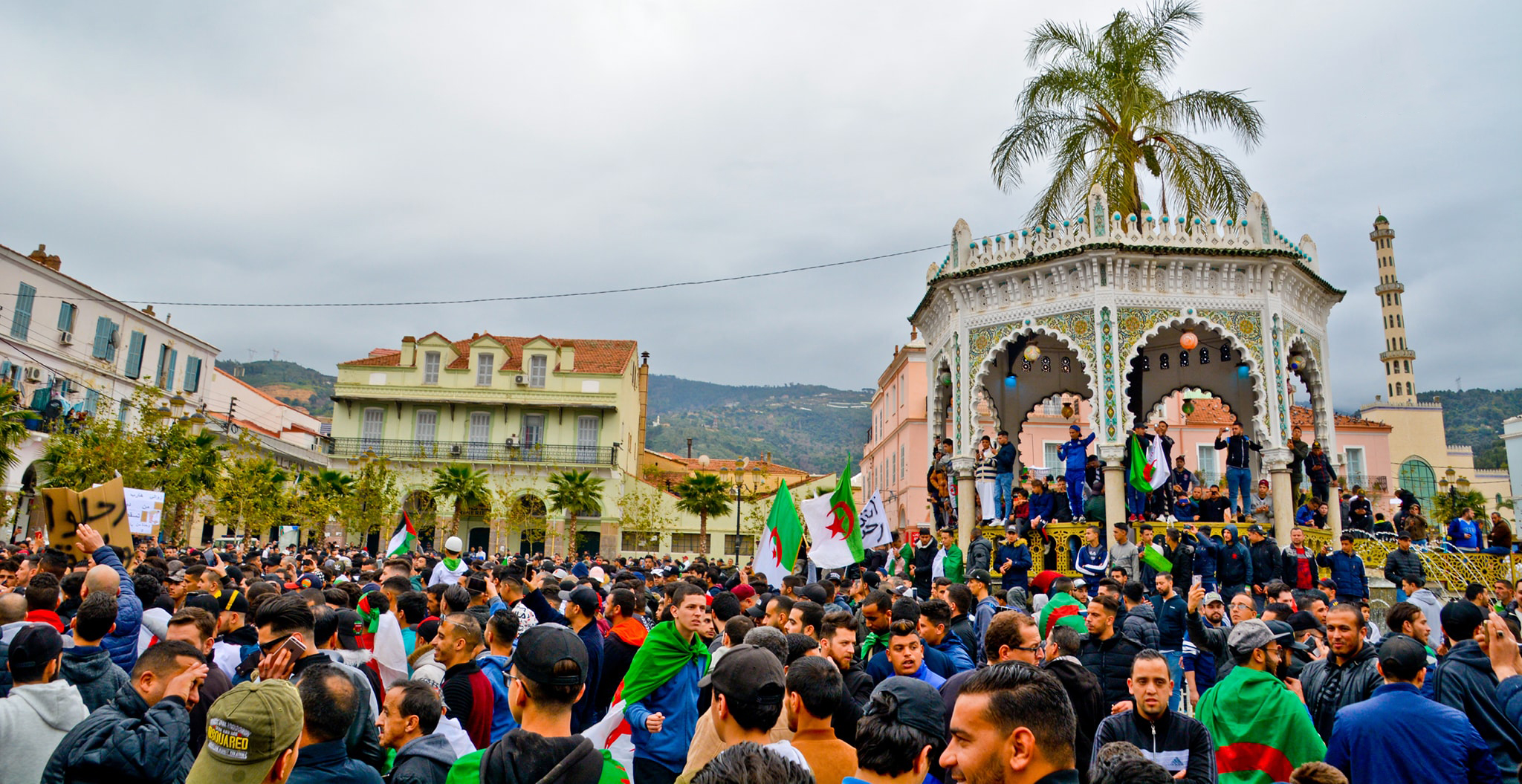
Demonstration in Blida, Algeria against the fifth term of Abdulaziz Bouteflika, March 10, 2019.Fethi Hamlati / Wikimedia
Algeria is in the midst of a historic popular uprising. Protests began in February of this year, as Algerians revolted against President Abdelaziz Bouteflika’s plans for a fifth term in office. Coming to power in 1999, Bouteflika suffered a debilitating stroke in 2013, after which he made few public appearances and was widely understood to be the puppet of a clique of high-ranking military figures. Protests intensified over the course of February and March, drawing millions to the streets of the capital Algiers and elsewhere, calling on Bouteflika to stand down before presidential elections originally slated for April 18.
In late March, the head of the armed forces Ahmed Gaid Salah called on the country’s Constitutional Council, the equivalent of the Supreme Court, to declare Bouteflika unfit for office. Last month, the octogenarian leader finally announced his resignation, turning over the presidency to the former head of the Senate Abdelkader Bensalah, under the terms of the Algerian Constitution. The latter plans to govern temporarily and oversee a new presidential election on July 4. However, protesters remain unsatisfied, continuing to demonstrate against corruption and in favor of a much deeper democratic transition.
To get a closer look at the protests, Jacobin’s Cole Stangler spoke with Algerian labor leader Rachid Malaoui. Since 2003, Malaoui has served as president of the SNAPAP (Autonomous Union of Public Sector Workers). He is also president of the CGATA (Autonomous General Confederation of Algerian Workers) a confederation of independent unions. Both are separate from the UGTA (General Union of Algerian Workers), the only union officially recognized by the Algerian government. The SNAPAP and CGATA have backed the protest movement since February. This conversation took place just after the ninth straight Friday of protests on April 19.