The Red Children’s Stories
In nineteenth-century Britain, a rich tradition of socialist fables and children’s stories denounced the capitalist system and its frightening inequities.
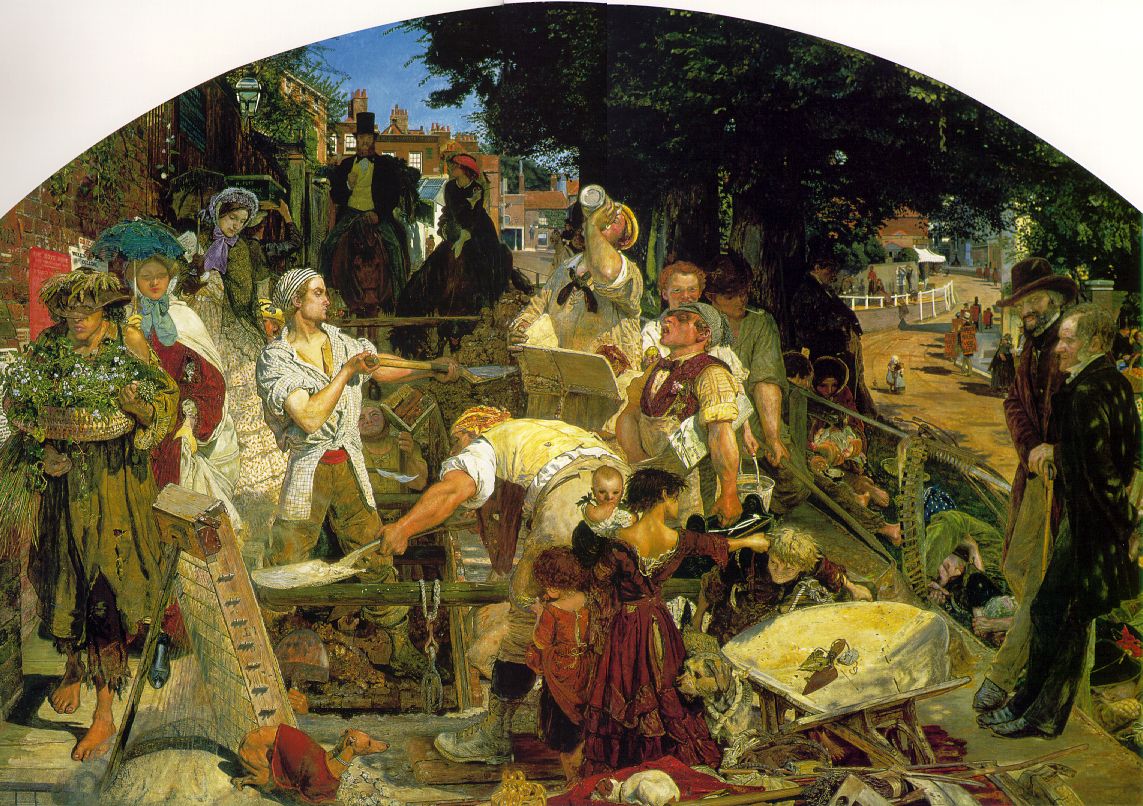
“Work,” by Ford Madox Brown, 1865. Manchester Art Gallery / Wikimedia.
In the late nineteenth century, Britain was the dominant global power, administering a vast empire that encompassed huge swathes of Asia, Africa, and North America. Conquest and plunder abroad went hand-in-hand with repression and exploitation at home; the imperial system was heavily reliant on a rapidly industrializing economy powered by what was proportionally the world’s largest proletariat.
Many workers remained politically disenfranchised. While the Second Reform Act of 1867 gave men in the skilled trades the right to vote, it would take until 1928 to win universal suffrage for both men and women.
Though overworked and politically powerless, the collective experiences of miners, manufacturing workers, and others fostered both a nascent class consciousness and an interest in the emerging ideas and institutions of the socialist movement. Despite the squalor and physical strain of industrial work, a vibrant intellectual life came into being, nurtured by growing trade unions, friendly societies, political associations, and periodicals trading in fiction and non-fiction alike.