The Winnipeg General Strike Is Immortal
A century ago this month, immigrant workers and World War I veterans launched the most dramatic labor struggle in Canadian history. Winnipeg's 1919 general strike is a reminder of our power as workers — and the brutality to which the bosses will resort to protect their profits.
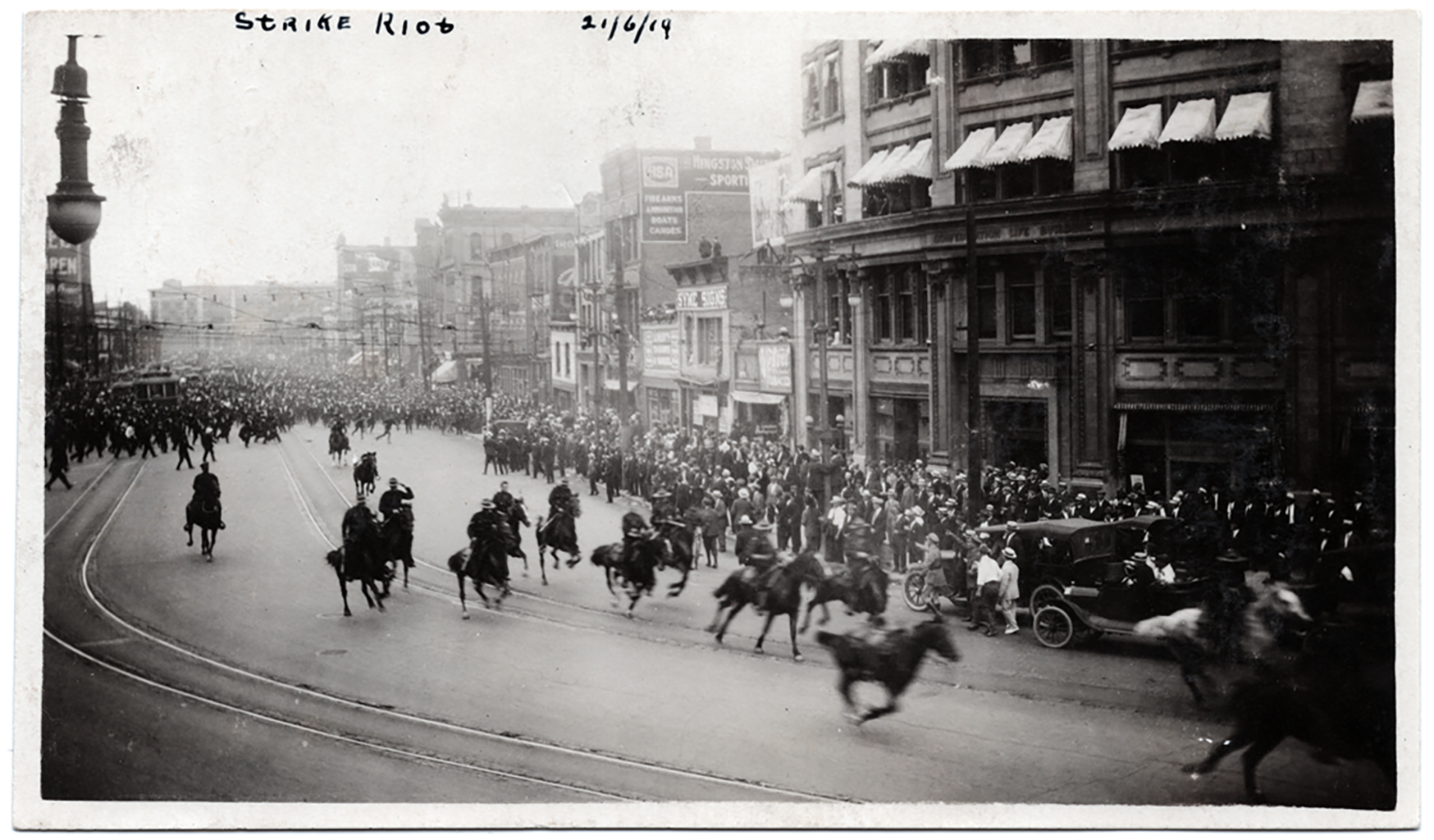
Mounted troops galloping around a bend in the road at Main Street and Market Avenue on Bloody Saturday, June, 21, 1919. Archives of Manitoba
One hundred years ago, Winnipeg was a powder keg.
In the early twentieth century, the city’s mostly Anglo-Canadian ruling class lived south of the railyards, in tony neighborhoods like Crescentwood where baroque Queen Anne style houses sat quietly along tree-lined avenues. Across the tracks, in the North End, Winnipeg’s largely Central and Eastern European immigrant working class lived in tenements and shanties which were vulnerable to constant outbreaks of cholera and typhoid fever.
The women of the North End toiled in garment factories, while the men risked life and limb in the factories and railyards. Separating Winnipeg’s two worlds was the Arlington Bridge. So many men lost their lives in the construction of the Arlington Bridge that it became known as the “Ribs of Death,” so named for its rib cage-like silhouette which towered over the men laboring in the railyards below.