The New Mainstream
Steve Bannon’s organizing model relied on an army of street brawlers and online cranks. The success of Le Pen and Farage in the European election shows something different: the far right is going mainstream.
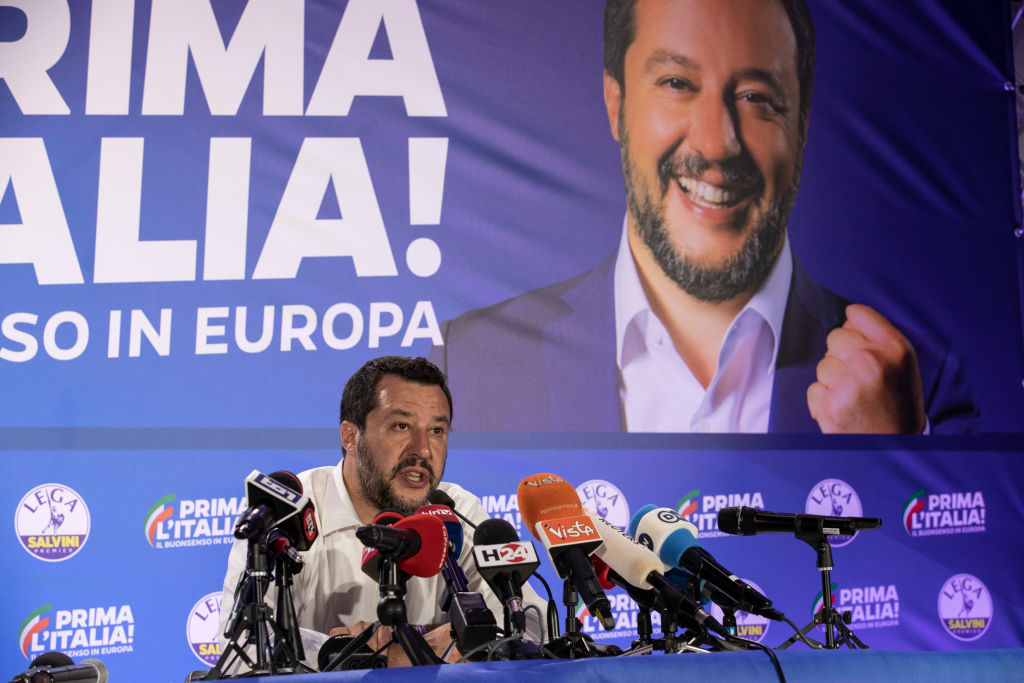
Italy’s Deputy Prime Minister and leader of right-wing Lega political party Matteo Salvini attends a news conference following the European Parliamentary election results at Lega’s headquarter on May 27, 2019 in Milan, Italy. Emanuele Cremaschi / Getty
The problem with trying to fathom the European election results is that the continent is so vast and varied that there are multiple counterpoints to any apparent trend. Take one of the most common readings, holding that this weekend’s vote saw the long-threatened triumph of the far right. Doubtless this was a good night for nationalists: Italy’s Lega and the Brexit Party in the UK are two of the three parties who will be sending most members to the new parliament in Brussels, while Marine Le Pen’s Rassemblement National (RN, ex-Front National) came first in France. Yet there were also a number of countries in which the far right’s vote stagnated or even fell.
Of those far-right forces who also stood in 2014, around a third saw their vote shrink: the two most striking cases were Jobbik in Hungary (from 15 percent to 6), and Golden Dawn in Greece (from 9 percent to 5). Other losers included Holland’s PVV (partly because of votes transferring within the far right), the Danish People’s Party (with Denmark’s centrist parties boasting of having outbid its anti-immigrant racism), and the Freedom Party in Austria (a 3 percent fall, perhaps less than might have been expected given its recent crisis). Even Le Pen’s vote dipped slightly.
At the same time, several expected breakthroughs did not materialize. While Spain’s Vox had scored over 10 percent in April’s general election, it slumped to 6 percent in the EU contest. There was a similar pattern in Germany, where the Alternative für Deutschland’s (AfD) vote shrank by 2 percent compared to the 2017 federal elections.