Theresa, EU’ve Done It Again
With Brexit bogged down and the Tories in meltdown, Labour looks set to tip the European Parliament elections to the center-left for the first time in a generation. Another own goal for Theresa May.
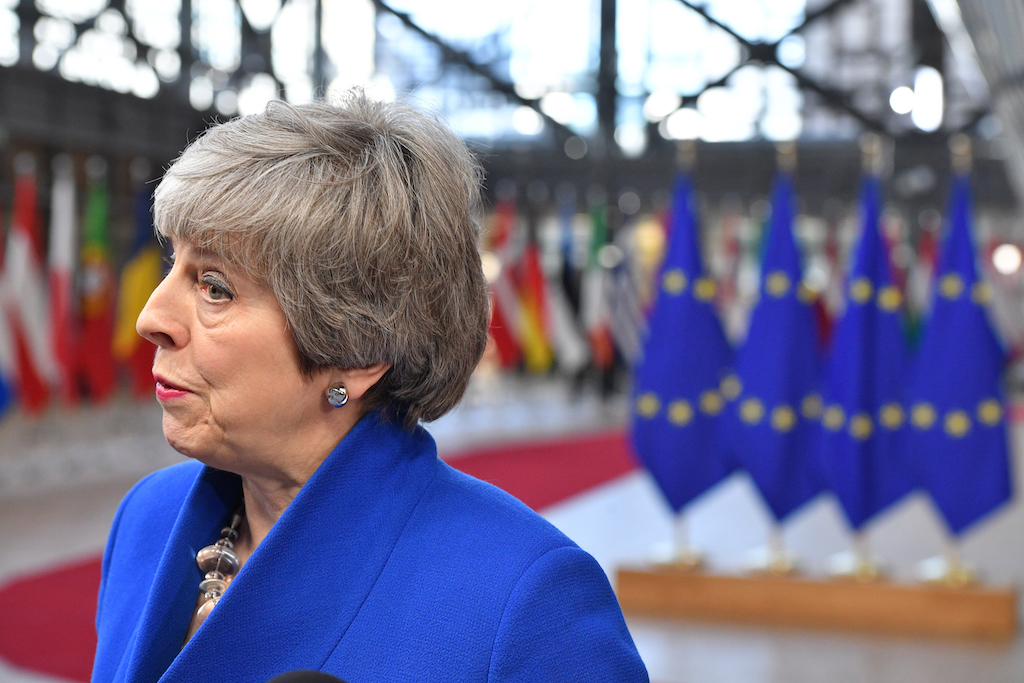
Theresa May at the European Parliament in Brussels on April 10, 2019. Leon Neal / Getty Images.
Last week in Brussels, Theresa May spoke to European Union leaders for just over an hour, with the British prime minister begging for a short extension to the deadline for the United Kingdom’s departure from the EU. Originally scheduled to leave on March 29, then on April 12 if May failed to get her withdrawal agreement through Parliament, or May 22 if she did, the UK after a long dinner meeting finally won agreement to a “flextension” until October 31, with an earlier exit if anything was resolved before then.
May had begged for a much shorter extension, until June 30, but EU leaders had no faith in her ability to agree anything by then and said that they were sick of holding endless summits for the benefit of a country and a prime minister terminally unable to agree anything. The majority of the dinner guests pushed for an exit date of either March 29, 2020, a year later than the original scheduled date, or December 31, 2019. But the French president, the centrist darling du jour, Emmanuel Macron, vetoed both dates, forcing the Halloween deadline. Other leaders were reportedly furious with Macron’s behavior.
May’s keenness for a short extension stemmed mostly from a desperate attempt to avoid fighting the European elections: partly because her party and candidates hate the idea of having to battle for seats they will only hold for a very short period; but also because the Conservatives will almost certainly be wiped out at the polls. The United Kingdom Independence party (UKIP), Nigel Farage’s erstwhile political home, are also expected to poll terribly, leaving Labour with a huge boost. A Labour landslide in the European elections will naturally help Corbyn, but it has far wider implications: under the rules of the EU Parliament’s Spitzenkandidat system, if Labour wins seventy-three seats, it will tip the balance of the European Parliament from center-right to center-left, likely handing the presidency of the European Commission to the socialists for the first time since the 1994 European elections.