France’s Repressed Fascist Past
- David Broder
A self-serving national myth portrays France as immune to fascism. Yet the Vichy regime had deep roots in the country’s prewar history.
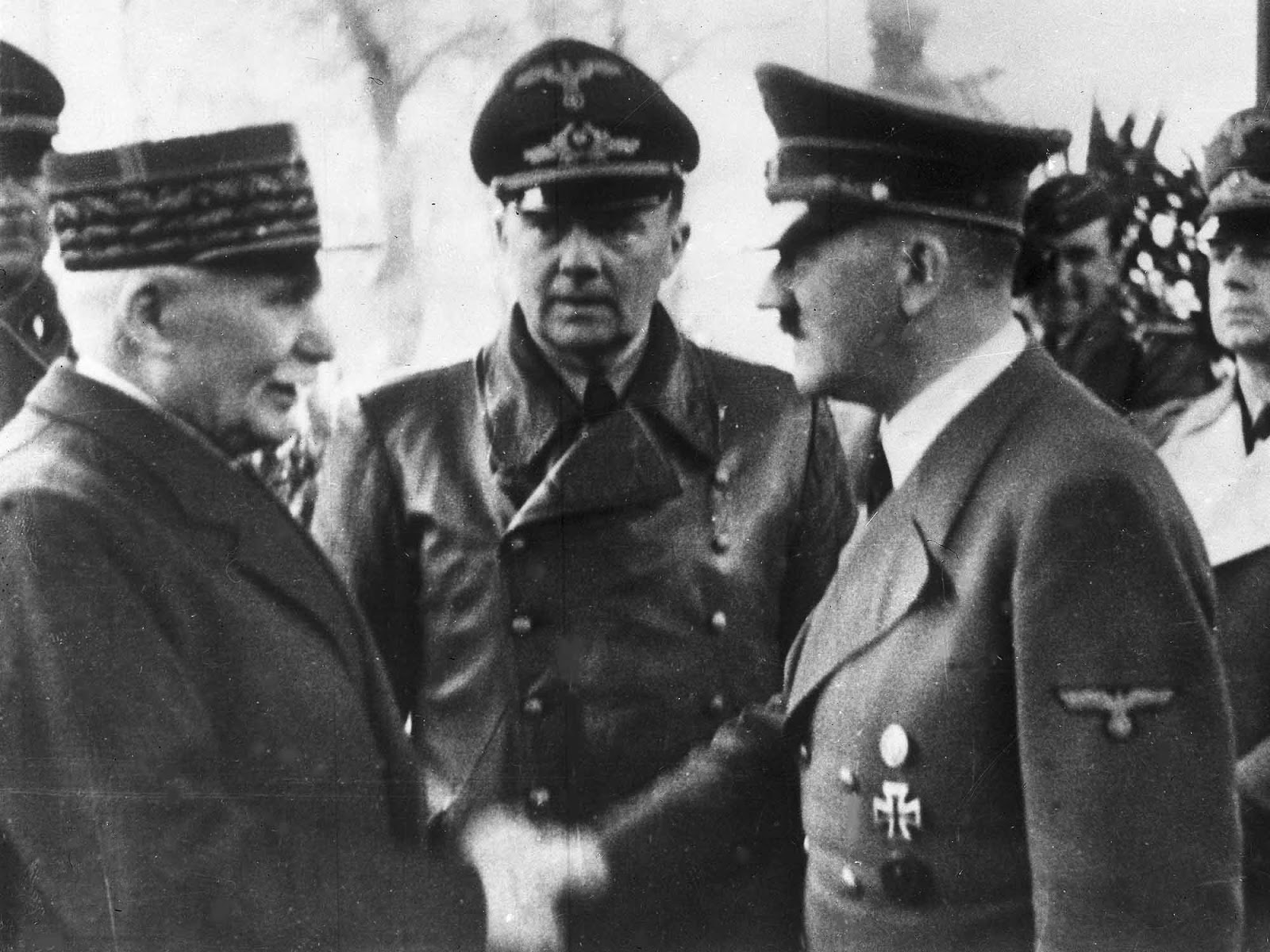
French president Philippe Pétain meets Adolf Hitler in 1940. Rare Historical Photos
Sigmund Freud defined repression as the move by which a subject tries to dispel their most troubling thoughts, images, and memories, or lock them away in the subconscious. Applying this metaphor at the level of whole countries, the repressed is the hidden face of the national story — the place where anything at odds with national mythology can be stashed away.
In France’s case, the wartime Vichy regime has long represented such a troubling moment. The writing of France’s national story after Liberation in 1945 was thus designed to cast off its real history and mask its crimes. Postwar narratives were based around myths that served this purpose, focusing on a victorious France in resistance while portraying Vichy as nothing but the fallout of the military debacle of 1940. A further key myth characterized the Nazi occupier as the driving force behind the eradication of the principles inherited from the French Revolution.
Put simply, this amounted to saying that “Vichy was not France.” General Charles de Gaulle himself said as much in 1944. But entrenching this myth required a national reconciliation process that could draw a line under the civil war produced by the occupation. This was well-expressed by the rapid issuing of ever-wider amnesties for wartime crimes between 1947 and 1953, but so, too, by the bid to produce a rose-tinted narrative of French history.