The “Skills Gap” Was a Lie
For years, capitalists and their journalistic mouthpieces blamed joblessness on a "skills gap." But there wasn’t a skills gap. There was a gap between what society owes people and what it’s willing to offer them at the expense of corporate profits.
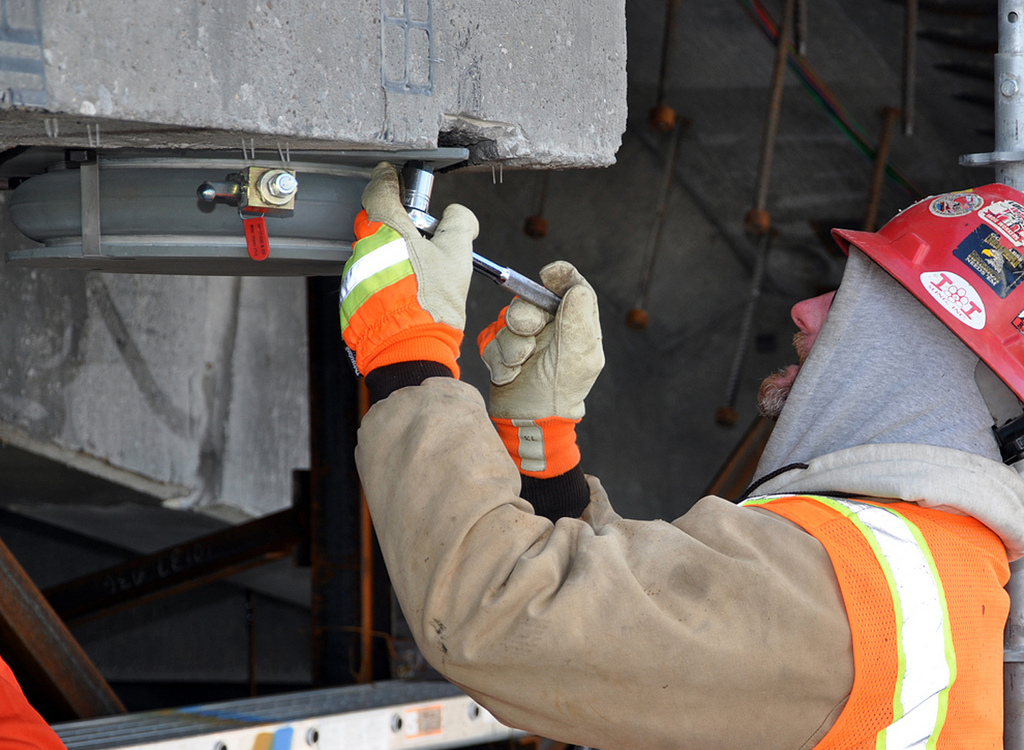
A worker on a dam in Olmsted, Illinois. LouisvilleUSACE / Flickr.
Despite the economic recovery, unemployment still commonplace — indeed, much higher than officially reported. And bosses and pro-corporate politicians still marshall the same excuses as to why. It’s the labor force, they say. The workers themselves aren’t good enough. There’s a “skills gap,” one that only government-subsidized training programs can solve. If this proposed solution amounts to a massive transfer of public resources to the private sector, that’s surely just a coincidence.
The “skills gap” explanation gained a lot of traction during the Great Recession, when unemployment ballooned and corporations were eager to displace responsibility. But left-wing economists maintained that there was was no skills gap at all. Employers were just being as choosy as possible, looking to cut costs by making job training somebody else’s responsibility. And they could get away with it during the recession, since high unemployment meant a torrent of applicants for every job opening, allowing them to hire only the cream of the crop — workers who gained their skills on somebody else’s dime (including their own).
The skills gap narrative was a bluff, said doubters on the Left. Companies were just pretending that perfectly qualified workers weren’t up to snuff, forcing desperate applicants to pursue training at their own financial expense, compete ruthlessly with each other for jobs for which they were overqualified, and then eventually, exhausted by routine rejections, settle for low wages. Companies were taking advantage of a weak economy to further exploit workers, and they were using the skills gap narrative as cover.