The Long Shadow of the Prison Wall
The Showtime mini-series Escape at Dannemora is a brutal portrait of the quintessential American prison town — where dehumanization reigns, no matter which side of the wall you're on.
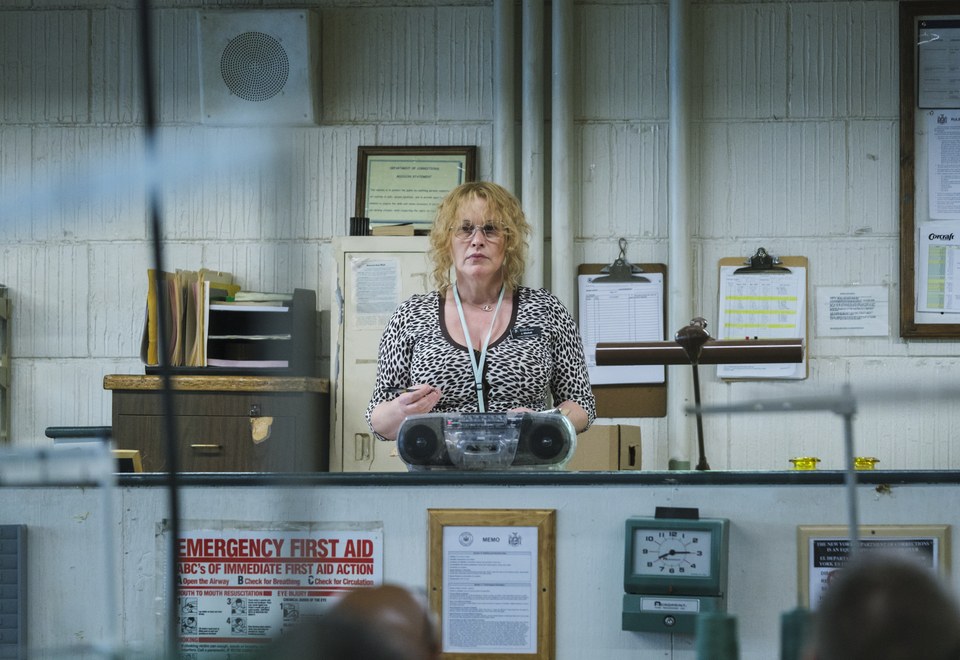
Patricia Arquette as Tilly in Escape at Dannemora. Showtime
In a telling scene from the finale of Escape at Dannemora, the Showtime mini-series, Lyle and Joyce Mitchell step into their kitchen to discuss the unfolding escape of David Sweat and Richard Matt from Clinton Correctional Facility. Lyle, who knows nothing of his wife’s role in the prisoners’ flight, suggests that they help the police find Sweat and Matt in the nearby woods. Joyce deflects, telling her husband that Sweat and Matt are “probably on a beach in Mexico by now.”
“What would they be doing in Mexico?” asks Lyle. “I don’t know,” Joyce rejoins, “maybe because it doesn’t suck ass to live in Mexico.” Wounded, Lyle responds: “Do you think it sucks ass to live here?” Ben Stiller’s television miniseries Escape at Dannemora is an extended and well-researched exploration of this question. The series suggests that it does, in fact, suck to live in a prison town, on whatever side of the wall.
Working in Dannemora and living just outside Malone, about ten miles from the Canadian border, the Mitchells’ lives consist largely of ferrying back and forth between two such prison towns. Prior to working at Clinton, Joyce Miller was employed at Tru-Stitch in Malone, a textile shop where she made moccasins. Malone is emblematic of political-economic shifts in upstate New York that have accompanied the rise of mass incarceration.