The Beginning of the End of Capitalist Realism
Mark Fisher died two years ago this month. He helped us see the collective depression we have all lived in for decades. If only he could have seen that depression finally start to lift.
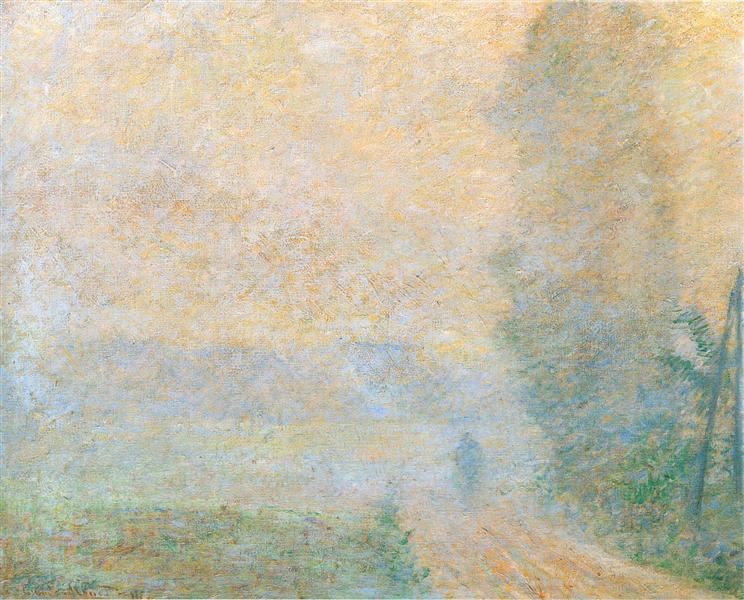
Claude Monet, “Path in the Fog.” 1887
Mark Fisher struggled his entire life with depression. That struggle culminated in his suicide on January 13, 2017. For Fisher, depression wasn’t solely an individual affliction, the result of a miswired brain or an imbalanced chemical or two. As he wrote in several essays in K-Punk: The Collected and Unpublished Writings of Mark Fisher (2004-2016), recently published by Repeater Books, he came to see depression as also a social affliction. And the social has given us plenty to be depressed about over the past four decades.
He often experienced his depression as a “sneering” voice inside his head. That voice felt deeply personal, to be sure. But Mark came to see that voice as “the internalized expression of actual social forces.” And those forces “have a vested interest in denying any connection between depression and politics.”
Those social forces were tied, no doubt, to the concept he was most famous for: “capitalist realism.” Capitalist realism, he wrote in his book of the same name, is “the widespread acceptance that there is no alternative to capitalism.” It’s not an enthusiastic embrace of neoliberal capitalism — that embrace has long passed, if it ever existed. Rather, it’s a widespread sense of resignation over the foregone conclusion that neoliberal capitalism is the only game in town.