A Thousand Points of Shite
How George H. W. Bush paved the way for Trumpism.
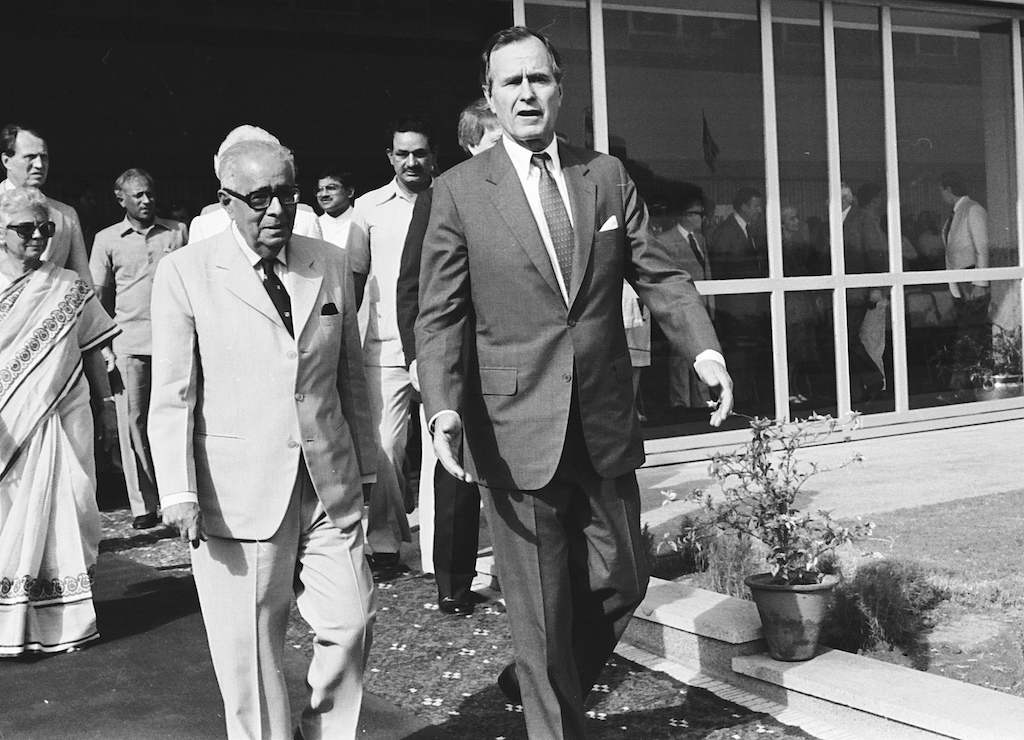
Vice President George H. W. Bush visiting New Delhi in 1984. US Embassy New Delhi / Flickr
George H. W. Bush is dead, and so is one phase of American political history. Pundits, news outlets, and political figures have been correct over the last few days to treat Bush, Sr’s — or Poppy’s, as he was known to his family — death with the significance they have. They just happened to have misunderstood this significance.
Bush’s death is a setting sun on a particular postwar consensus and collection of political assumptions that much of the establishment continues to vainly grasp at, even as they fade away, never to return. No, not that of civility, decency, or moderation, none of which have ever really held a solid foothold in US political culture, and all of which Bush himself violated on numerous occasions. Rather, Bush represents a link to a vanishing past of right-wing politics that flourished in the postwar era and has been obliterated since the Reagan “Restoration.”
Bush was many things: a pampered rich boy and a medal-winning World War II fighter pilot; an Eastern establishment political scion and a Texas oil man; a Nixon acolyte and a Reagan successor. He was both a member of that “Greatest Generation” that held a stranglehold on political power until the precise moment his presidency ended, and the last gasp of the quaint, old guard, “moderate” Republicanism that prevailed during the short-lived New Deal consensus, and which was all but eradicated by his predecessor.