Richard Pipes, the Historian as Essentialist
For Richard Pipes, the anticommunist ideologue and historian, Soviet tyranny was rooted not in communism, but in the Russian soul.
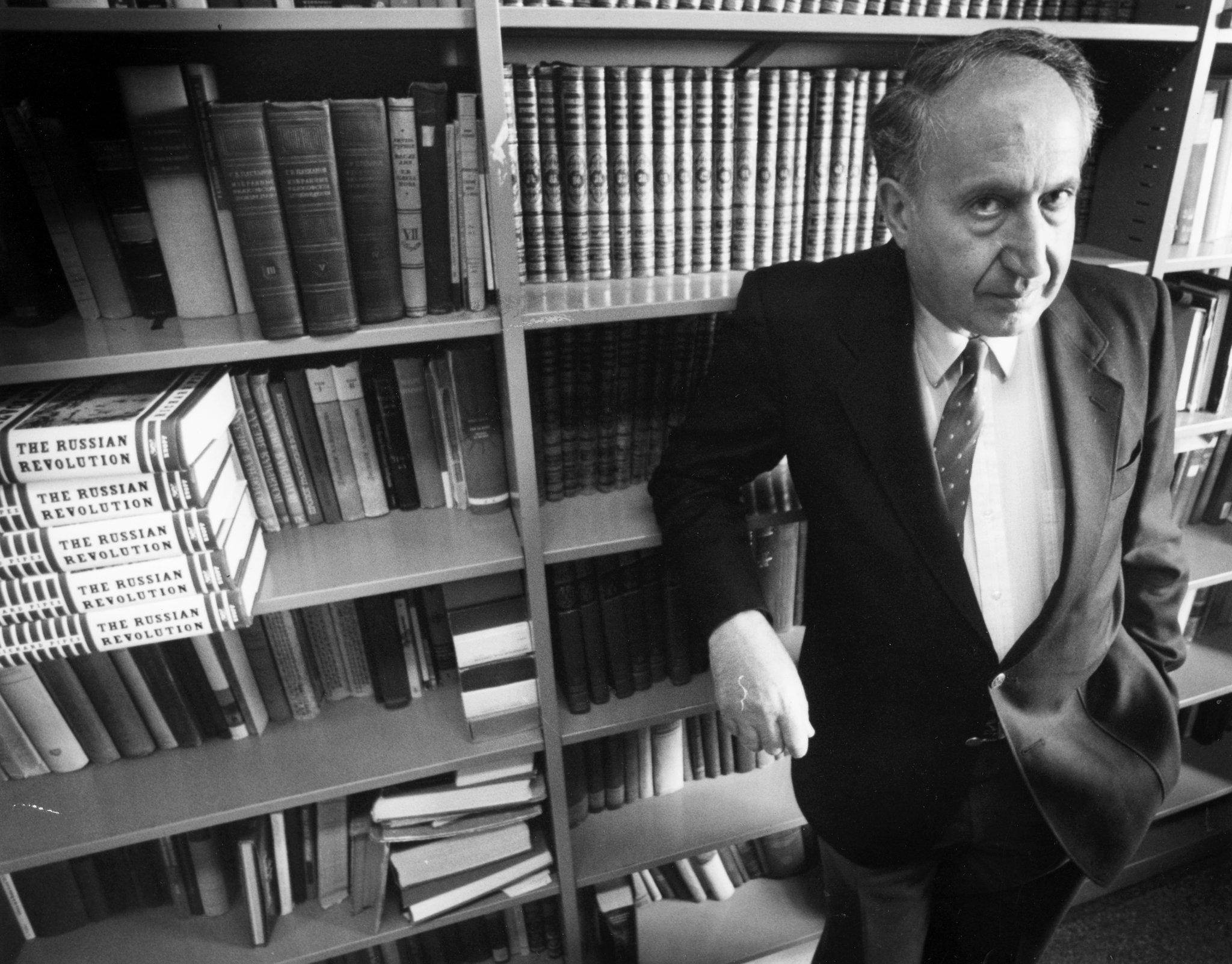
Richard Pipes in his study at Widener Library on Harvard campus, 1991.Levan Ramishvili / Flickr
Richard Pipes, who died on May 18 at the age of ninety-four, was a proud, ardent anticommunist. But this was the least interesting thing about him.
His anticommunist books represented his most banal work. More provocative was how Pipes’s understanding of Russia’s historical development colored his analysis of the Soviet Union and the Cold War. For Pipes, the problem of the Soviet Union lay not simply in 1917, Lenin, Stalin, or even Marxism-Leninism. As he wrote in Survival is Not Enough, “the decisive factors [for Soviet authoritarianism] are not the ideas but the soil on which they happen to fall.”
Pipes’s historical broadsides, his attacks on détente, and his advocacy for American nuclear dominance all flowed from his archaeology of that soil. Russia’s true “original sin” was not its adoption of communism in 1917. Rather, it was its failure to develop private property in the fifteenth century: a sin that caused its historical path to diverge from the West’s and, for Pipes, a determinism that made the problem of Russia not so much about communism, but Russia itself.