“Yellow Vests” Against the “President of the Rich”
France is no stranger to disruptive mass protests. But the “Yellow Vests” movement that blocked its highways last weekend represents a new front of struggle against neoliberal president Emmanuel Macron.
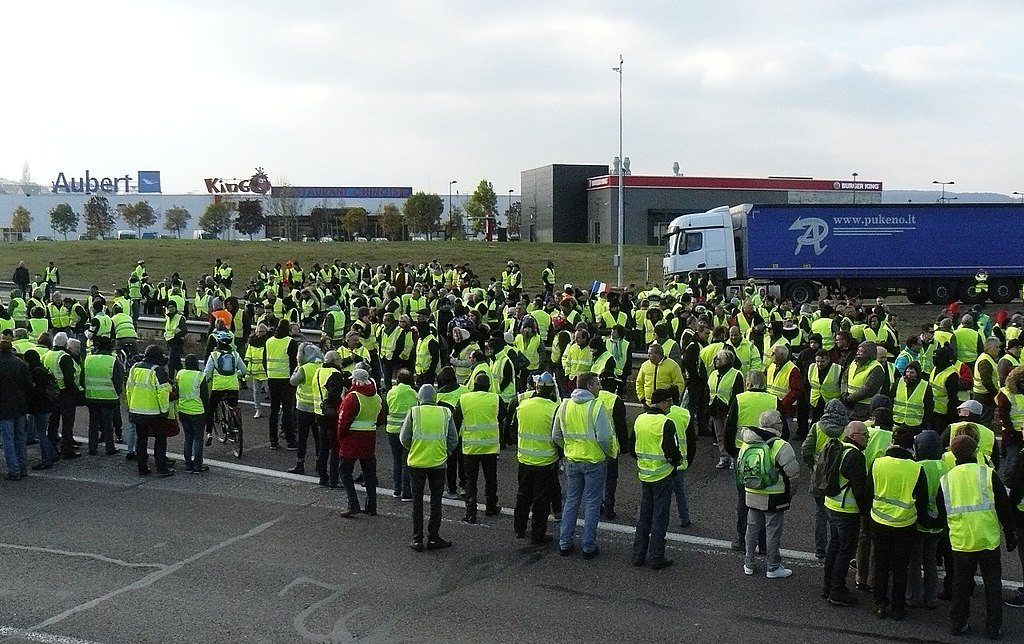
“Yellow vest” demonstration around the Vaugine roundabout in Vesoul (Haute-Saone), November 17, 2018. The highway is blocked in both directions.Obier / Wikimedia
Last weekend more than 300,000 people took to the streets — and highways — across France, marching, disrupting traffic, and blockading thoroughfares to protest rising fuel prices. United by their anger at the rising cost of living, they responded to social media calls to “block the country” and show solidarity by donning “yellow vests” (gilets jaunes) — an article of clothing French motorists are required to carry in their cars in case they break down.
The mobilization has waned since Saturday, November 17 — its first day — when, according to the Interior Ministry, 290,000 people took part in more than 2,000 different blockades and rallies across France. Despite calls to keep up the pressure, just 46,000 turned out on Sunday and 20,000 on Monday. The movement appears far from dead, though. Protesters are gearing up for a march on the capital next Saturday: “Act 2: All of France to Paris,” the Facebook event promises.
The political establishment has been caught flat-footed. Prime Minister Edouard Philippe, a member of President Emmanuel Macron’s La République en Marche party, has vowed the government will not repeal a planned hike in the fuel tax much maligned by protesters. But he also said that he understood people’s “suffering.” In typical fashion, Macron has not yet commented on the matter, saying he would only do so “in due time.”