A Humanitarian Exodus
The Central American migrant caravan traveling to the US border highlights the failures of American migration and foreign policy, and dwindling options for refugees to seek safety. We should welcome them with open arms.
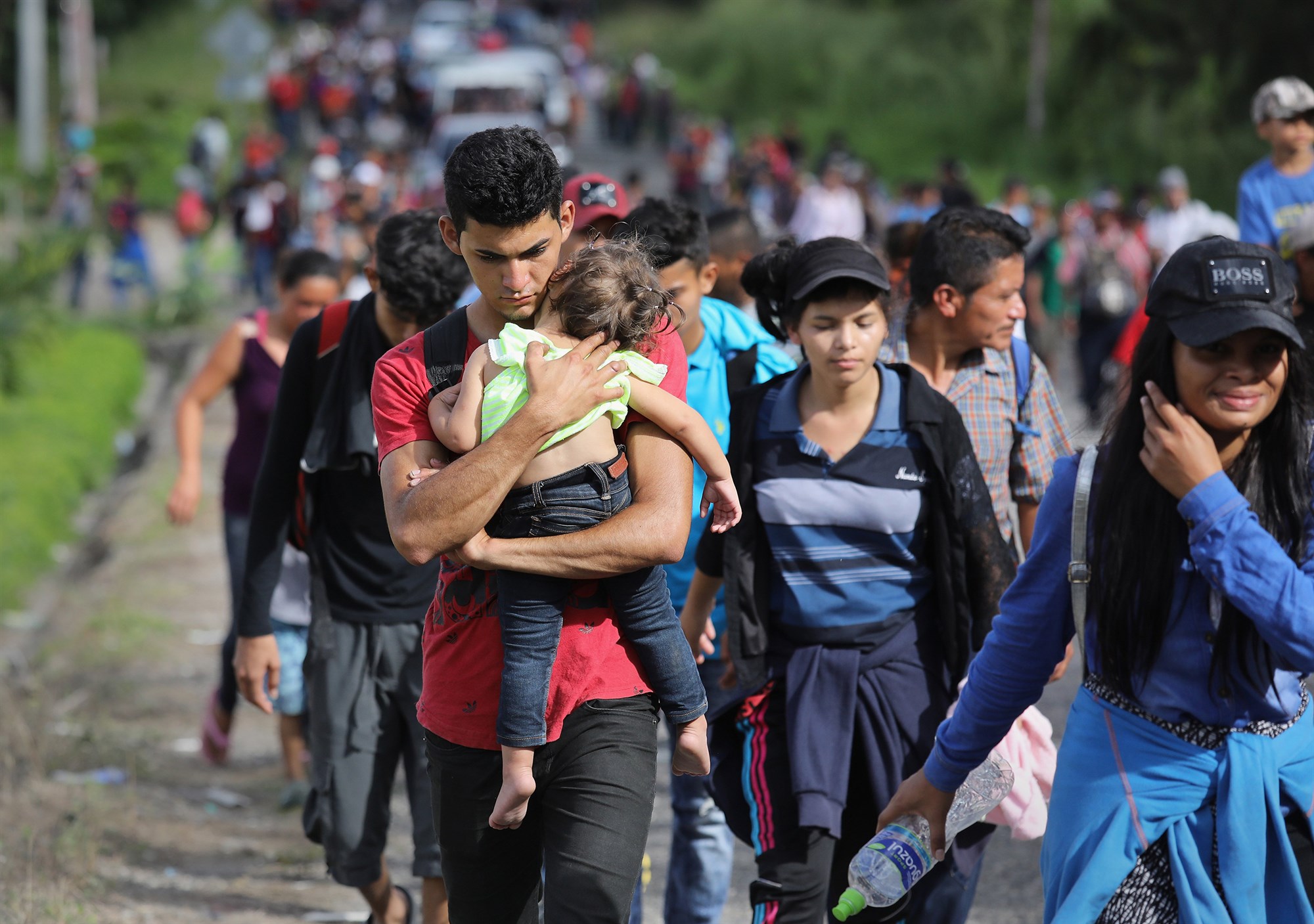
Honduran migrants move north after crossing the border from Honduras into Guatemala on Oct. 15, 2018 in Esquipulas, Guatemala. John Moore / Getty
The migrant caravan that has dominated news headlines over the past week is continuing to grow as it crosses from Guatemala into Mexico. A group of around 1,600 people left Honduras early last week, but thousands more have joined. As of Sunday, some 7,000 people had arrived to Tapachula after crossing the Guatemala-Mexico border the day before. Upon arrival, many collapsed in exhaustion after enduring a twenty-three-mile walk in 90-degree heat in one day. Some were later siphoned onto buses and sent to await their fates at a temporary shelter at the site of an annual fairground.
Caravans as an activism strategy are not new, but the sheer size and media attention the most recent one has received sets it apart. “What is happening right now, what we are witnessing, does not have precedent,” said a statement released by Mexican immigrant rights organizations Sunday. The situation is unfolding rapidly, as conflicting reports convey a region in chaos.
Trump has pledged to cut off aid from Honduras if they do not stop the caravans, threatened to reinstate a variation of familial separation, and to deploy the military to the US-Mexico border to close it off to migrants. On Sunday he claimed that “criminals and Middle Easterners” were involved in the caravan, and that it was funded by Democrats, a clear fear-mongering effort two weeks ahead of the US midterm elections. These allegations came on the same day as a statement by Secretary of State Mike Pompeo, which declared that “we also are deeply concerned by the violence provoked by some members of the group, as well as the apparent political motivation of some organizers of the caravan.”