Harry Leslie Smith (1923–2018)
The life of Harry Leslie Smith, a working-class rebel to the end, was a towering monument to socialist compassion, internationalism, and peace.
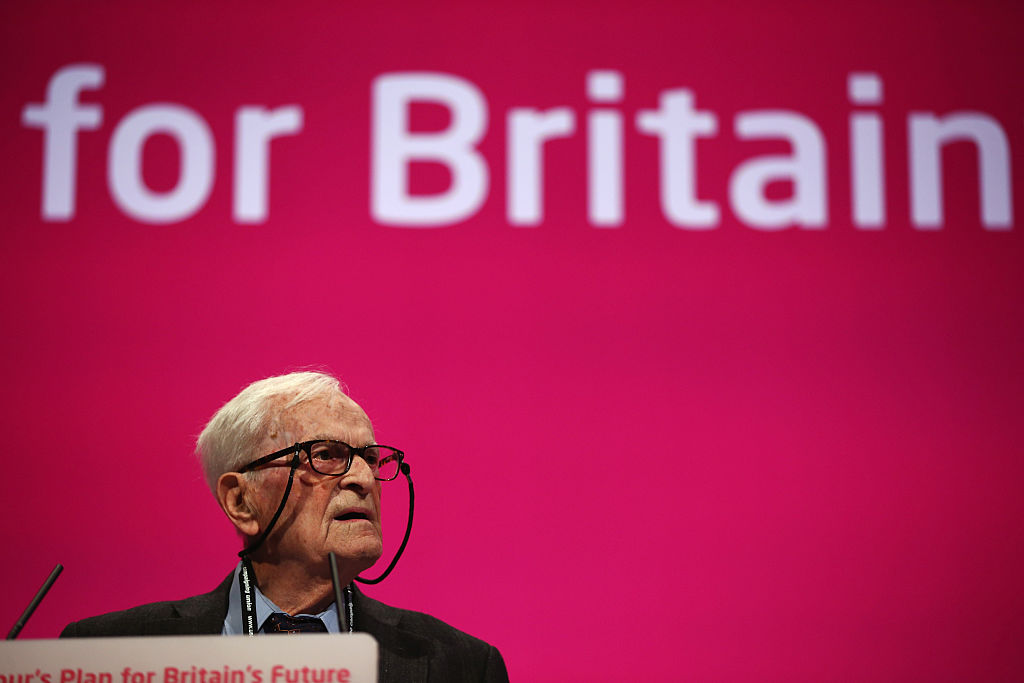
Harry Leslie Smith delivers an impassioned speech about his life and the NHS on September 24, 2014 in Manchester, England.Dan Kitwood / Getty
I remember how peace smelled on that day in May 1945. Of lilac, petrol and the rotting flesh of the dead German civilians entombed beneath the fire-bombed city of Hamburg. I was 22 years old. After four years of fighting with the RAF, I had survived and been given the chance to grow old and die in a bed. It was a day to weep for those that had been lost but also to dance and celebrate life, to drink to our good fortune.
When Harry Leslie Smith entered the public eye, he had already experienced well over eight decades of life and witnessed the cumulative horrors and triumphs of a century that had seen the world engulfed in revolution, reaction, depression, and war. Through his eloquent writing and campaigning, he would share the memories, lessons, and warnings of that century in the hope that younger generations would be spared the needless suffering into which he himself had been born.
The son of Lillian Dean and Albert Smith, Harry came into the world by way of Barnsley, Yorkshire during the bleak February of 1923. As he recounted more than ninety years later in the 2014 testament Harry’s Last Stand, his was a country of crippling poverty and social murder. With both the Spanish flu and the trenches of the Great War still hanging in recent memory, his family would eventually live through the Great Depression, Hitler’s bombs, and postwar austerity before seeing the tides turn for working people.