How New York Politics Has Changed
Andrew Cuomo took his victory lap in last week's New York election. But the incumbent class below him has been shattered, and his base is hungry for radical change.
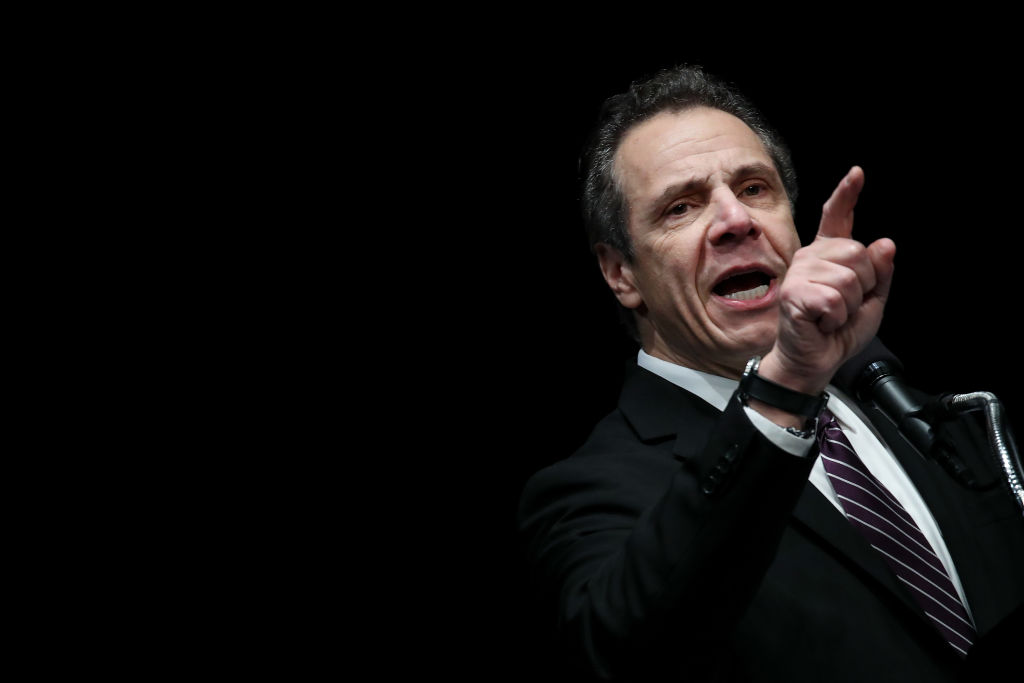
New York governor Andrew Cuomo. (Drew Angerer / Getty Images)
Election season in New York is effectively over. After a left-wing primary challenge by Democratic Socialists of America–backed candidate Cynthia Nixon, incumbent governor Andrew Cuomo remains in place. But the political situation around him has changed.
Turnout doubled this election, handing Nixon over 500,000 votes — a good deal more than the 361,380 Cuomo claimed in 2014. Her campaign forced him to disband the Independent Democratic Conference, a group of Democrats in the New York State Senate that caucused with Republicans. The IDC lent the Republicans an artificial majority in the state senate and kept progressive bills from reaching Cuomo’s desk, allowing the governor to maintain a left-wing image without actually passing any left-wing legislation.
Activists went further, forming a coalition called No IDC NY that mounted a slate of challengers to the onetime IDC senators. With Nixon highlighting their project at every turn, they were overwhelmingly successful. On election night, challengers ousted six of the eight IDC senators, including IDC founder Jeff Klein. What’s more, socialist candidate Julia Salazar, who sustained such an onslaught of inquiries into her personal history that she became the most-covered state senate candidate in history, trounced her landlord-backed opponent Martin Dilan by seventeen points.