Syriza’s Repressive Turn
Alexis Tsipras’s government promised to end austerity. Now it’s defending the banks against people evicted from their homes — and persecuting those who protest.
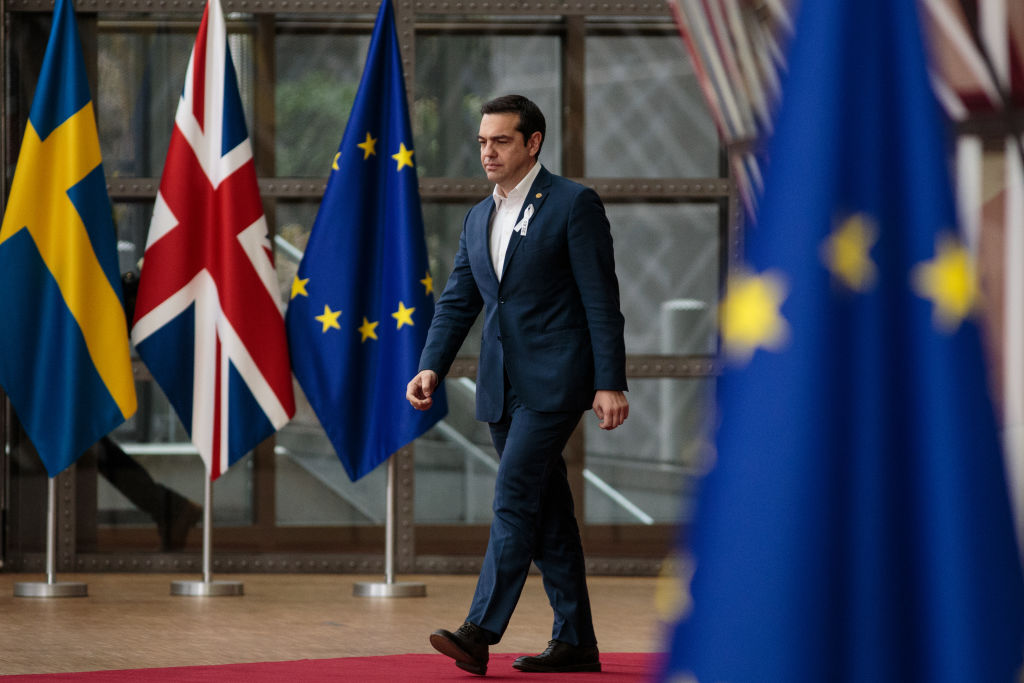
Prime Minister of Greece Alexis Tsipras arrives at the Council of the European Union for the first day of the European Council leaders’ summit on March 22, 2018 in Brussels, Belgium.Jack Taylor / Getty
Many on the international left believe that things in Greece are slowly improving, and that the Syriza government remains a left-wing force that is protecting the interests of workers and the poor even despite very difficult conditions. For those who accept this view, recent developments in the country will come as a nasty surprise.
The bitter reality is that, since surrendering to the Troika of Greece’s creditors (EU, European Central Bank, IMF) in July 2015, Tsipras and his government have pursued the same radical neoliberal policies implemented by all Greek governments since 2010, when the first bailout agreement was signed with the Troika.
The Tsipras government has undertaken drastic cuts in public spending, furthered deregulation, and extended privatization as well as squeezing wages, pensions, and social benefits. It has especially reduced public investment, while raising indirect and direct taxation to unprecedented levels, ruthlessly hitting low- and middle-income households.