Friends In High Places
When the state offers unions a seat at the table, it can make their members politically passive. Is the trade-off worth it?
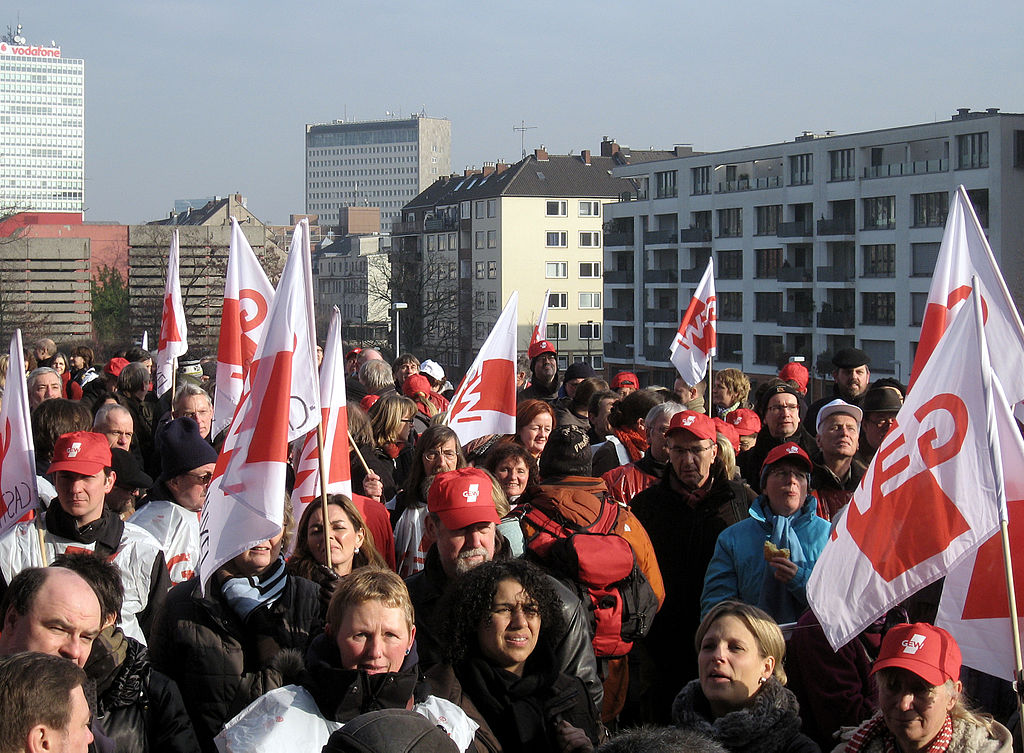
A trade union demonstration in Düsseldorf, Germany. Mbdortmund / Wikimedia.
Most conventional scholarship on labor unions concentrates on their effects on the distribution of economic resources. It typically finds a positive correlation: collective bargaining raises worker pay, as it’s designed to do.
But focusing on wages alone doesn’t give us the whole picture. In order to understand unions’ impact on working people’s power as a class, and therefore their prospects for resisting capitalist class power broadly speaking, we need to examine the effects of different kinds of union arrangements on workers’ political participation. What kinds of unions encourage what kinds of political behavior, and to what degree?
We also need to understand how likely that worker political participation is to make a significant impact on society, which means we need to look at the national political contexts in which different kinds of unions operate. For example, some types of unions better encourage strikes and protests, but some states repress that political activity more than others. Only by comparing unions’ effect on political participation across political systems can we begin to comprehend unions’ potential for working class empowerment, and under what circumstances.