The Movement Against “Modern Day Slavery”
American prisons are barbaric. The national prisoners’ strike is a righteous response to those horrendous conditions.
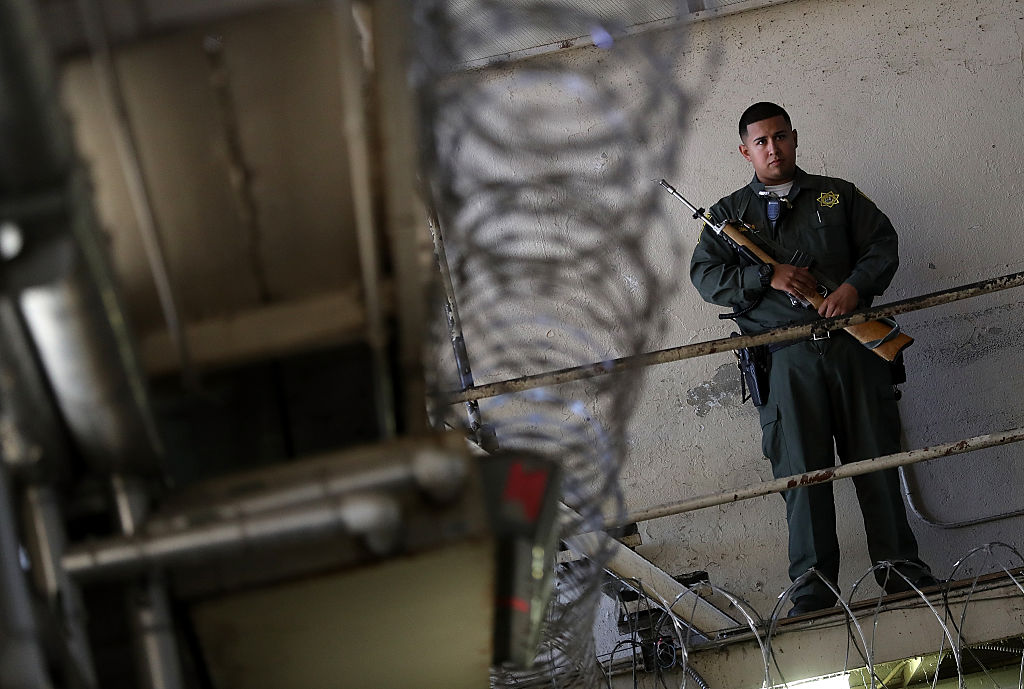
An armed California Department of Corrections and Rehabilitation (CDCR) officer at San Quentin State Prison’s death row on August 15, 2016 in San Quentin, California.Justin Sullivan / Getty
On August 21, forty-seven years after the assassination of key movement organizer and theoretician George Jackson, prisoners across the country once again began mobilizing. Ranging from sit-ins to work stoppages, boycotts to hunger strikes, their actions have followed a nationwide call for sentencing reform, improved living conditions, greater access to rehabilitative programming, and an end to what strike organizers call “modern day slavery.”
In the weeks leading up to the start of the strike, women and men held in prisons, jails, and immigration-detention facilities in at least seventeen states had confirmed their participation, a number that is sure to rise as news of the strike continues to spread. Such a high level of involvement in this strike suggests not simply the continuation of, but also a potential upsurge in a prison movement that, as an informational video has put it, is “self-organized, independent, and fighting against the brutality of the prison system.”
Movement History, Making History
Initiated by Jailhouse Lawyers Speak (JLS), a collective of those providing legal aid and support to other prisoners, this year’s strike highlights the movement’s growing sophistication. JLS, which first announced the strike via Twitter, intentionally picked dates that bridge the anniversary of Jackson’s killing with the start of the 1971 Attica prison rebellion on September 9.