What Abolitionists Do
Prison abolitionists aren't naive dreamers. They're organizing for concrete reforms, animated by a radical critique of state violence.
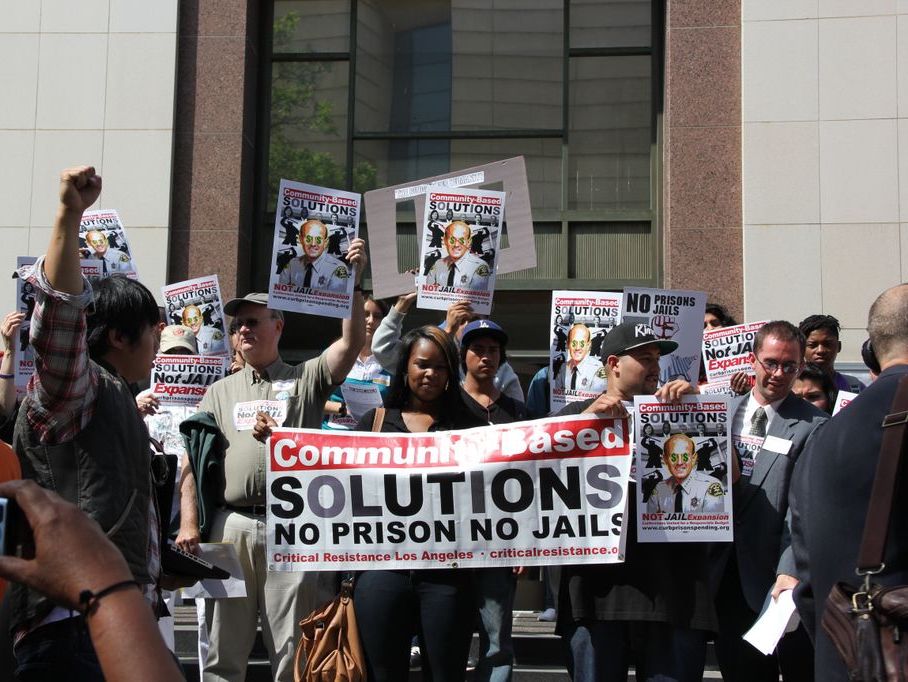
An anti-incarceration protest in California in 2012. Critical Resistance
Abolition has always been a bold project.
Whether in response to private property and nineteenth-century chattel slavery, or the prison industrial complex of the last half century, abolitionist movements have unsettled not only conservative critics but liberals, progressives, and even some radicals. The stubborn immediacy of the demand disturbs those who hope for resolution of intractable social problems within the confines of the existing order. To them, abolition is unworkably utopian and therefore not pragmatic.
Critics often dismiss prison abolition without a clear understanding of what it even is. Some on the Left, most recently Roger Lancaster in Jacobin, describe the goal of abolishing prisons as a fever-dream demand to destroy all prisons tomorrow. But Lancaster’s disregard for abolition appears based on a reading of a highly idiosyncratic and unrepresentative group of abolitionist thinkers and evinces little knowledge of decades of abolitionist organizing and its powerful impacts.