Divide and Conquer
The primary election in New York provided socialists with some hints about how they might split the Democratic Party's working-class base from its elite leadership.
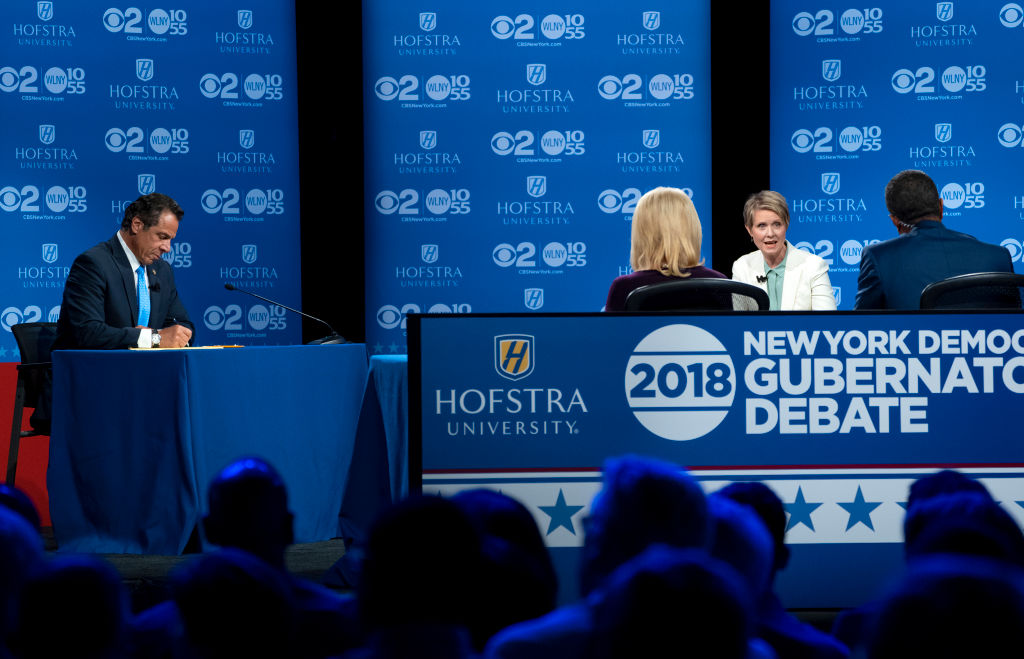
Cynthia Nixon during a debate with New York Gov. Andrew Cuomo on August 29, 2018 in Hempstead, New York. Craig Ruttle-Pool / Getty Images
September 13 was a disappointing night for New York gubernatorial candidate Cynthia Nixon. After a high-profile campaign covered widely in local and national press, she received just 34.4 percent of the vote — not much more than the 33.4 percent left-wing challenger Zephyr Teachout won against incumbent governor Andrew Cuomo in 2014.
But the election was less disappointing for the broader forces she attached her campaign to. Jumaane Williams, running for lieutenant governor on Nixon’s slate, captured an impressive 46.7 percent of the vote against the Cuomo-aligned Kathy Hochul. Zephyr Teachout came in second place at 31 percent in a crowded field for attorney general, nearly inching out primary winner Tish James.
More clear-cut victories occurred down-ballot. Thanks to Nixon’s persistent targeting of the Independent Democratic Caucus, a breakaway group of Democrats who caucused with the Republicans, handing them an artificial majority in the state senate, anti-IDC challengers swept their races. Only two out of eight IDC senators will be returning to Albany; the rest will be replaced by the left-leaning challengers. And Nixon’s fellow Democratic Socialists of America candidate Julia Salazar trounced incumbent state senator Martin Dilan by seventeen points.