Iran’s Quiet Counterrevolution
Decades of neoliberalism have reshaped Iranian society — leaving its battered Left in a quandary.
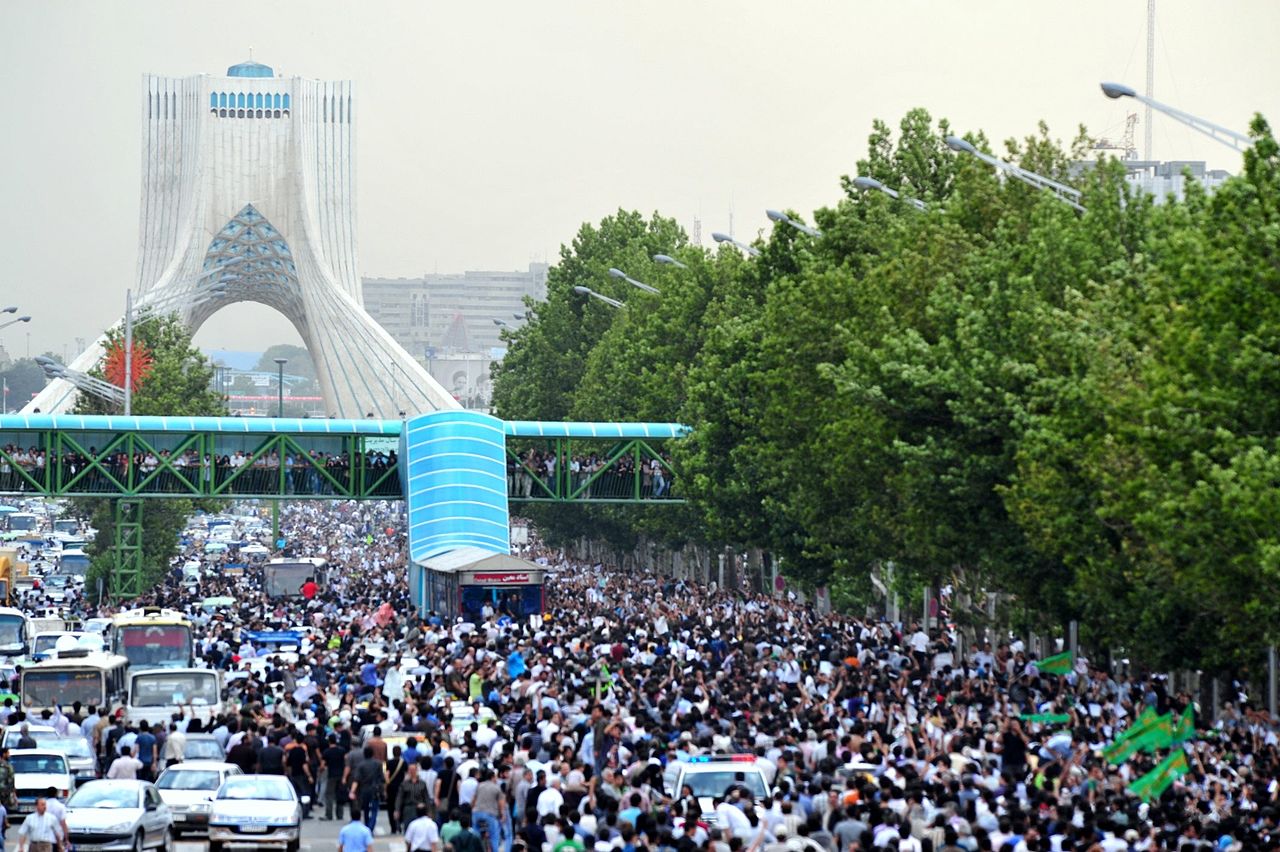
The third day of the 2009 Green Movement protests in Tehran.Hamed Saber / Flickr
It’s become common for American officials to invoke dire economic conditions in Iran as an opportunity to push for the collapse of the Islamic Republic in Tehran, or as leverage to convince it to engage in direct negotiations with the US. And as the start of the latest round of sanctions loom, economic conditions for ordinary Iranians are getting more precarious every day. In fact, large segments of Iranian society have been experiencing hardships for years, and protests have become an everyday routine.
Harsh US sanctions have played a key role in worsening living conditions, and the coming ones will intensify Iranians’ suffering to an unthinkable extent. Yet the Iranian government bears its own share of responsibility for the grievances of Iranian society. That’s why the widespread riots in Iran at the beginning of this year, though they came as a shock to those who were unfamiliar with the situation in Iran, or were in denial about it, had been expected by those who had been monitoring and criticizing the Islamic Republic’s economic policies for years.
The riots that took place in Iran in late December and early January 2018 were hardly unpredictable. Iranian sociologists, economists, and public intellectuals had been warning about the possibility of massive protests for the past few years. The official unemployment rate reached 12.6 percent in the spring of 2017, while youth unemployment reached 26.4 percent. The minimum wage amounts to less than 40 percent of the poverty line, which itself is considered too low by many economists. According to official figures, 12 million people in Iran live in absolute poverty, while one economist estimates that 6 percent of the population go hungry.