From Anti-Corruption to Democracy in Guatemala
Anti-corruption politics won’t liberate Guatemala from the military, organized crime, and the wealthy. But only elites’ interests will be served by shutting down the country’s attempts to root that corruption out.
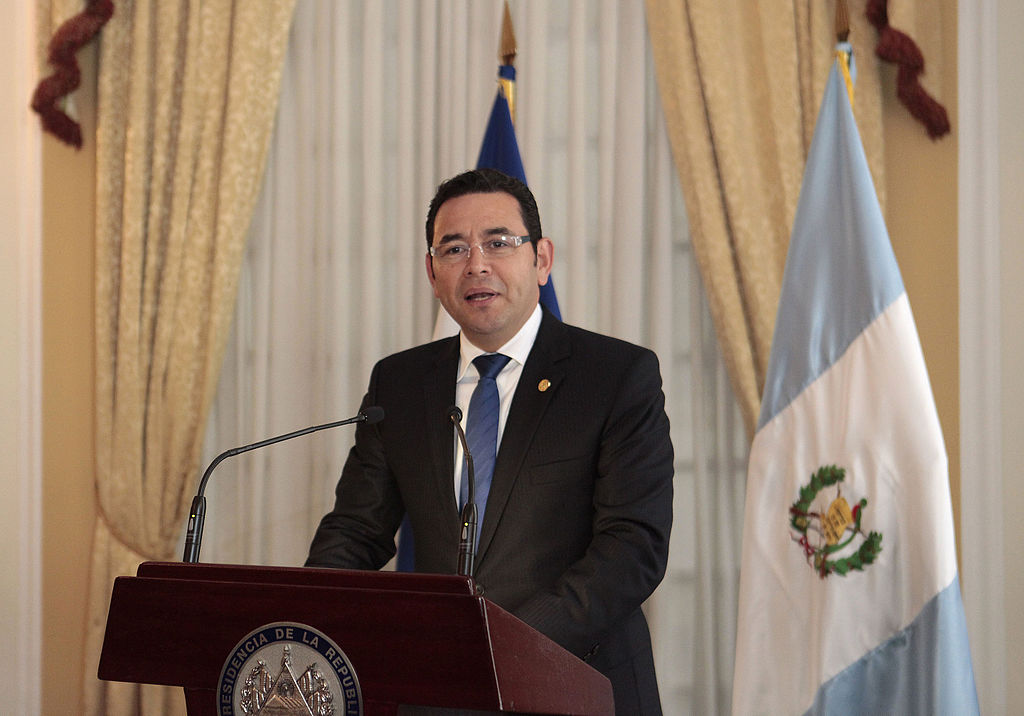
Guatemalan president Jimmy Morales, April 16, 2016.Presidencia de El Salvador / Wikimedia
In Guatemala, as in the rest of Central America, September 15 is celebrated as Independence Day. In both 2017 and 2018, the “mes de la patria” (“Month of the Fatherland”) has been marked by significant escalation in a simmering political crisis that began in 2015 with a series of street protests that eventually led to the resignation and subsequent arrest of the country’s president and vice-president, Otto Pérez Molina and Roxana Baldetti.
It’s no coincidence that current Guatemalan president Jimmy Morales and the sectors of the military and economic elite that have closed ranks behind him chose this time of year to take drastic action against the International Commission against Impunity in Guatemala (CICIG), an anti-corruption initiative in the country. September is a month of celebration, in which the street corners and market stalls are filled with Guatemalans selling the light blue and white national flags, and school children march in clanging bands and run with uncovered containers of fire in torch relays — a perfect month for the corrupt elite that runs the country to appeal to nationalism and vestigial anticommunism to arrest the progress against corruption and tamp down growing social movements.
The obstacles that have been thrown in front of CICIG’s work range from reducing the number of police assigned to CICIG to the nonrenewal of CICIG’s mandate and the denial of reentry to the country of the head of the commission, Ivan Velasquez. This campaign against CICIG has coincided with the killing of dozens of leaders of rural indigenous and campesino activist leaders in the last nine months — portents of a return to the militarized, corrupt, repressive Guatemalan state that terrorized its citizens in the years before the 1996 Peace Accords that ended thirty-six years of civil war.