Voting With Their Feet
Romania has the world’s second-highest emigration rates. Those emigrants are now taking to the streets and fighting to change the conditions that drove them out.
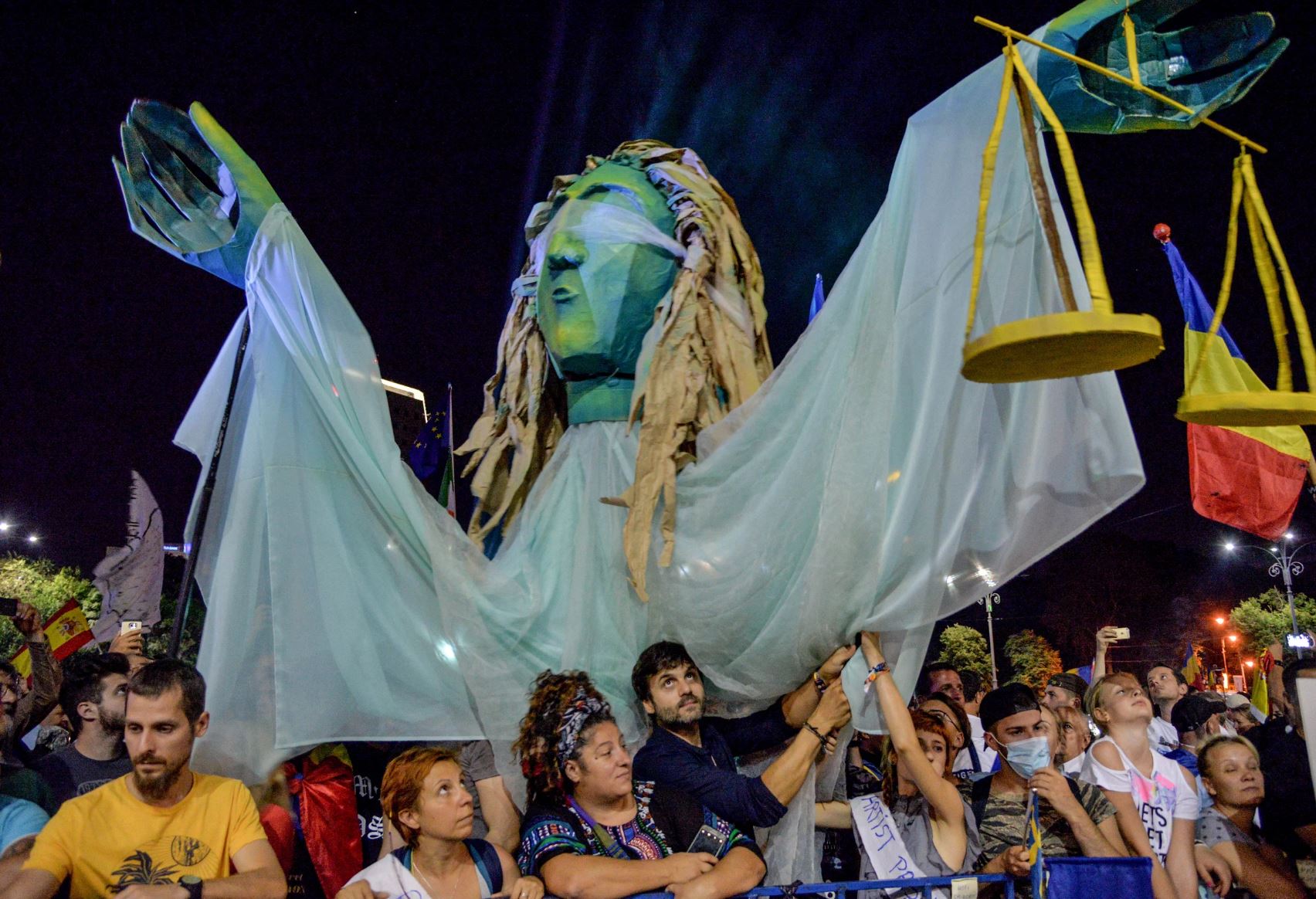
One hundred thousand people took to the streets of Bucharest, Romania on August 10 to protest government corruption. Matei Bărbulescu
On August 10 around one hundred thousand people gathered in front of the government building to protest against Romania’s ruling Social Democrat Party (PSD). Despite its name, this oligarchic party has nothing to do with social democratic values. The protests centered on new laws that will decriminalize abuse of office and remove checks on connections between the political arena and shadowy private interests.
The citizens in the frontline were not, as some officials claimed, hooligans picking a fight with the forces of order. But the protests did soon turn ugly. After some people began to lob stones, eggs, and bottles at the riot police, the gendarmes panicked and responded with tear gas, pepper spray, and water cannon. Peaceful protesters were hit with clubs, women with their children were tear-gassed and intimidated, random passers-by were brutally beaten, and journalists were shoved because they were filming the abuse. 455 people needed medical attention.
Such repression reflects the weak-rootedness of democratic rights in Romania, not even three decades since the end of Nicolae Ceaușescu’s dictatorship. Until recent years citizens were little used to taking the streets and demanding their rights; demonstrations that were not party-political tended to rally few Romanians. But despite their lack of formal organization, today’s protests also stem from a deeper radicalization, encouraged by the involvement of some of Romania’s near-four million emigrants.