Fascism’s Face-Lift
Anti-communist campaigns in Eastern Europe aren’t about building a more democratic society — they’re about rehabilitating the far right.
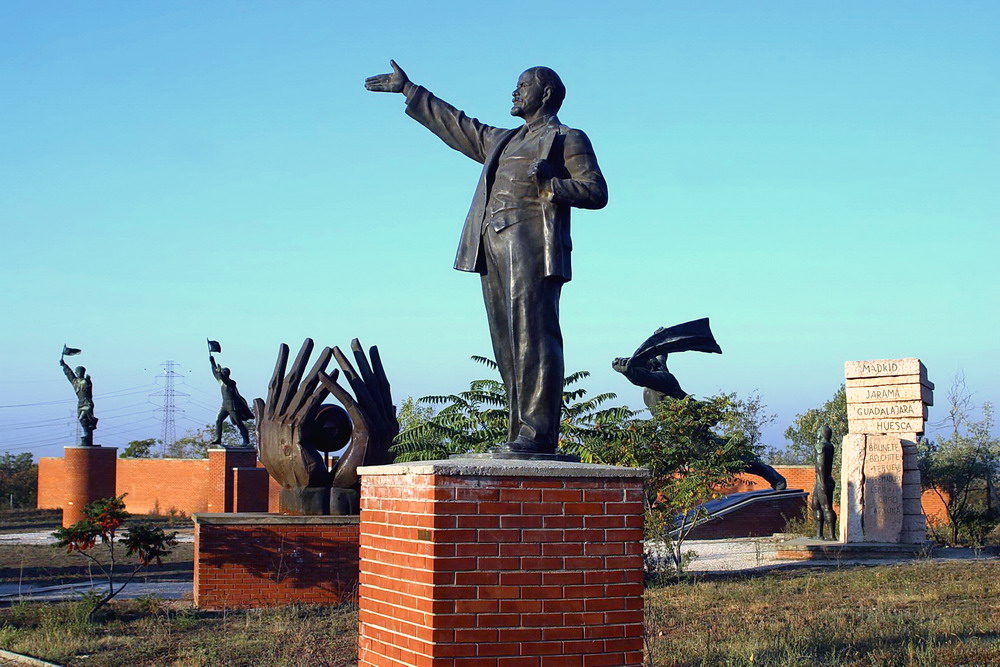
Wikimedia Commons
Last year, antifascists in Poland commemorated the country’s international brigades on the eightieth anniversary of the Spanish Civil War. Their gathering came under attack and a smoke grenade was thrown through the door. Inscribed on the projectile was the phrase “ha pasado,” “we have passed,” Franco’s retort to Dolores Ibárruri’s “no pasarán” on the day the Republic fell.
Another iconic turn of phrase associated with the civil war owed much to Poland’s influence. “A las Barricadas,” the anthem of the anarcho-syndicalist CNT federation, became the war’s most famous song — but it wasn’t exactly an original. Its tune had been written by Józef Pławiński and its lyrics by Wacław Święcicki, both Polish socialist musicians. Their “Warszawianka” had been the anthem of the 1905 Polish Revolution, when worker militias sought to overthrow the Russian imperial government.
Today, progressive history is under attack not only in Poland but across Eastern Europe. From its beginnings “decommunization” took aim not only at the Soviet era but at earlier socialist and republican history too. In the 1990s, as the Hungarian government began the wholesale removal of Communist statues, it decided to store them all in a single place. Budapest’s Memento Park was born and the architect who won the competition to design it, Ákos Eleőd, was clear about its intentions. “This park,” he said, “is about dictatorship.”