Refugees: The New Greek Odyssey
- Jeff Bate Boerop
Though the migrant crisis is no longer in the news, thousands remain stranded on the Greek islands in a state of total uncertainty.
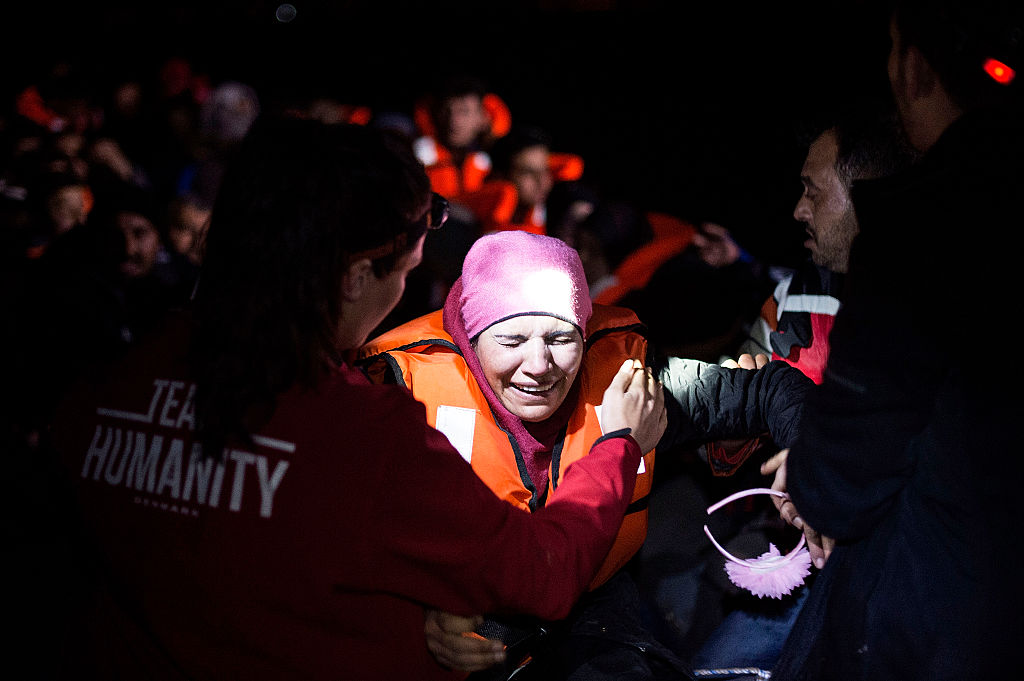
A Syrian refugee cries shortly after arriving on an inflatable boat with other refugees from Turkey to Lesbos in March 2016. Conditions on the island remain abysmal for refugees today. Alexander Koerner / Getty Images
The forced exile of Ulysses, King of Ithaca, from his island and his family is perhaps one of the most emblematic narratives of Western literature. It is one of the deepest expressions of the feelings of exile and homesickness, and of the pain caused by the impossibility of return.
If this epic has reverberated so strongly in the minds of European peoples, it is perhaps because Europe has been the scene of immense wars and conflicts that have made this exile a collective experience that is difficult to erase from memory. However, if Homer’s story still speaks to us today, it is probably less for those people living in Europe than for those washing up on its shores.
The images of exile that come to our minds today are not the thousands of dissidents, Jews and resistance fighters fleeing on the roads from the expansion of German Lebensraum, but rather the ceaseless arrival of thousands of refugees to the Greek islands on inflatable rafts. We may also quite clearly imagine the piles of life jackets — which we could until recently “visit” near the village of Molyvos — paradoxically more evocative of a contemporary art exhibit than of a human drama still in progress.