Ortega and the Uprising
The Daniel Ortega of today is not the Daniel Ortega of the Sandinista Revolution.
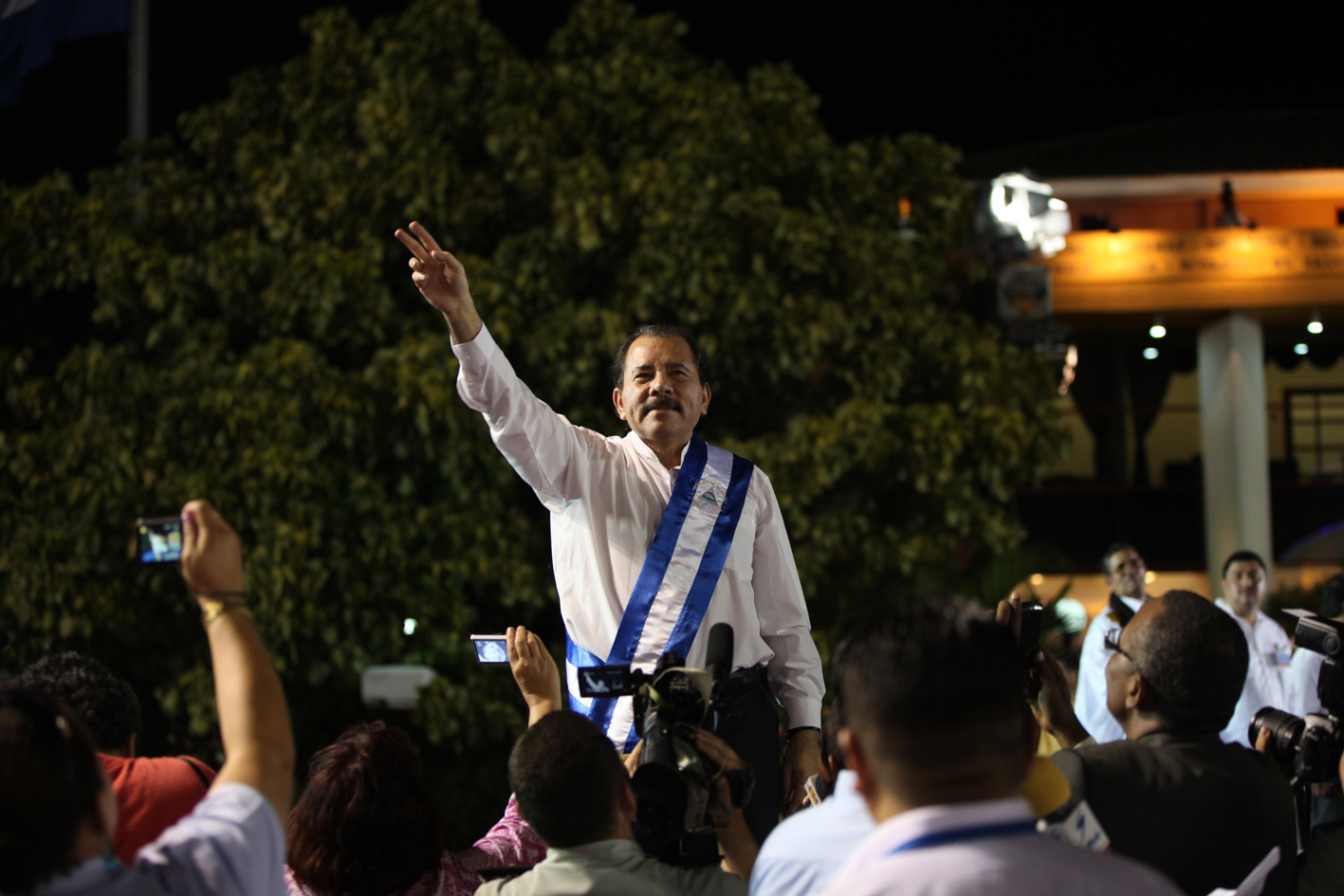
Nicaraguan president Daniel Ortega in 2012. Cancillería del Ecuador / Flickr
In 1983, I was reading old newspapers in the National Archive of Nicaragua in the basement of the presidential house and seat of the government. Buried in a labor conflict from 1944, I didn’t pay much attention to the conversation that was unfolding a few feet away. Some people were chatting about their families and baseball. I glanced up and I noticed Daniel Ortega talking to the archivist, his assistant, and the custodian. He greeted me and then continued talking in the most relaxed manner imaginable for a head of state whose country was at war.
Although I was somewhat critical of Ortega and the Sandinista leadership, he nonetheless made a powerful impression on me as a decent, utterly unpretentious human being. A few days earlier, his brother Humberto, then the defense minister, also made an indelible impression on me as he bounced our wandering three-year-old daughter on his knee in an open-air restaurant.
That memory makes it hard to square with the news reports about Ortega’s active role in the violent repression of anti-government activists. In April, students, some peasants, and others began to protest first against the slow government response to a wildfire in a protected area and then against new social-security taxes. The movement then expanded rapidly in response to governmental efforts to crush the protests. Memories of revolution or not, we have to face reality.