The Gig Economy Fantasy
Stories about a new age of precarity are overblown. Workers have had to deal with economic insecurity since the dawn of capitalism.
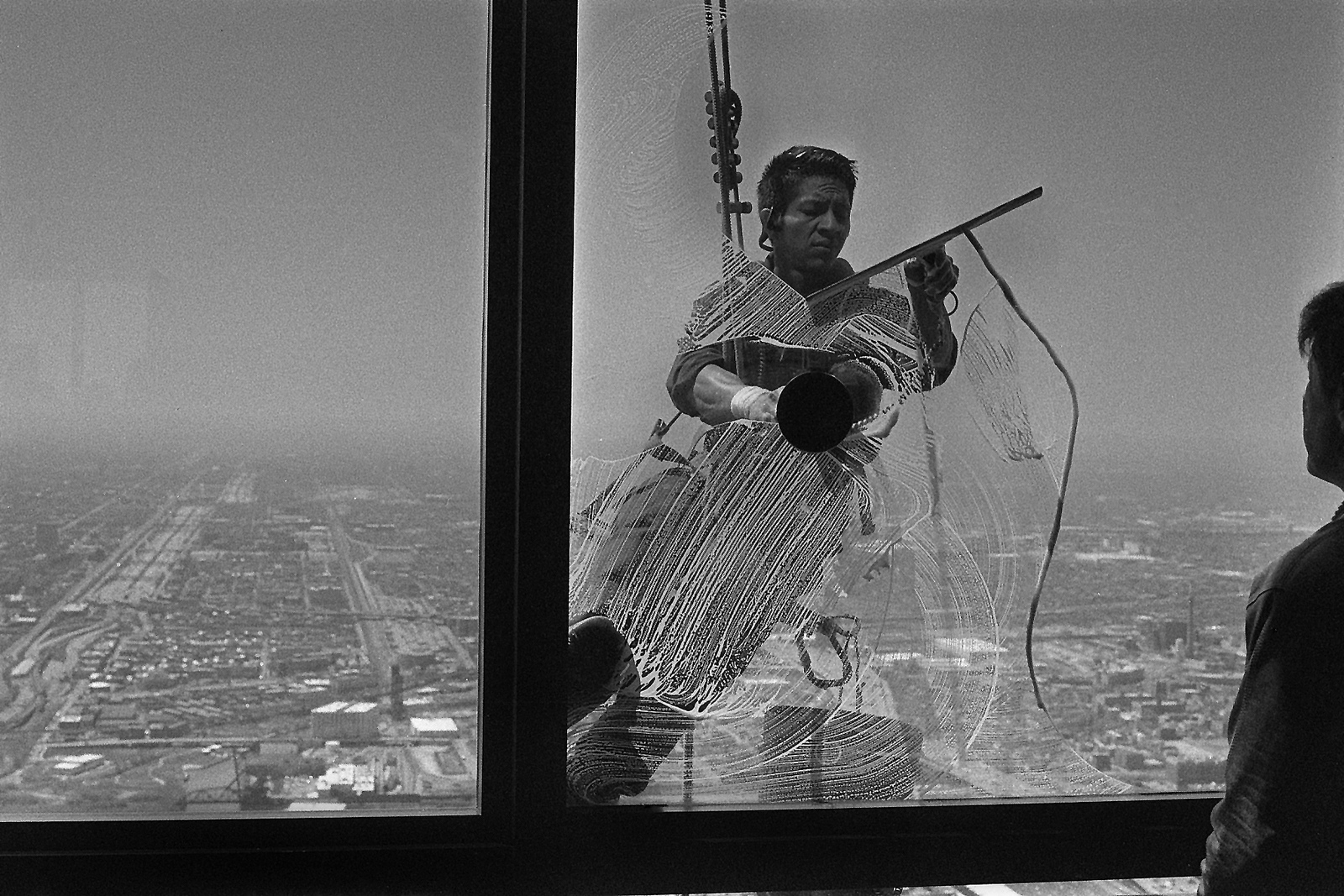
A window washer in Chicago. Tom Hart / Flickr
My post on contingent and “alternative” work annoyed some people who think the Bureau of Labor Statistics (BLS), the source of the data, is missing the point through bad definitions and bad techniques. (As am I, for using it.) According to these critics, asking people whether they expect their jobs to last the year is using the wrong definition of contingency — though it’s not clear what the right one is, since most employed people in the US can be fired for no reason at all at any time.
Or the BLS was wrong to focus only on the primary job; plenty of people do gig work on the side to supplement their incomes, so the Bureau is — perhaps intentionally! — lowballing the numbers.
Yes, though we don’t know how many such people there are (though we’ll know more when the BLS releases its data on “individuals who found short tasks or jobs through a mobile app or website and were paid through the same app or website” on September 30). But the side hustle is a different story from the canonical gig economy line, which is that we’re all day laborers now.