The Stakes of the Great Return March
For seventy years, Israeli violence has permeated every aspect of Palestinians’ lives. Once again, Palestinians are resisting.
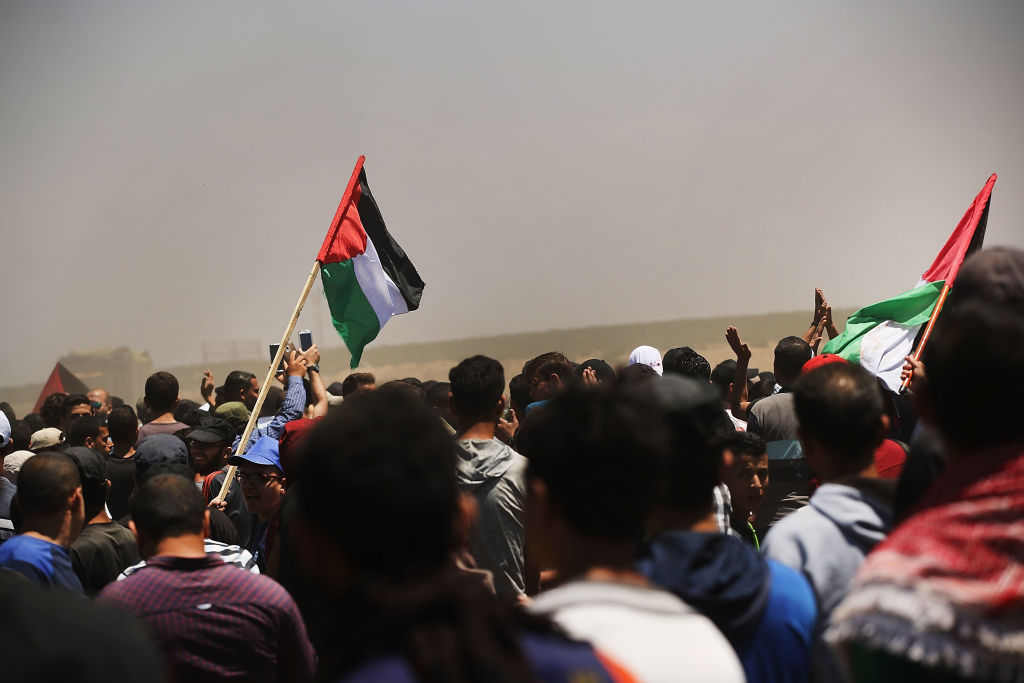
Thousands of Palestinians stand along the border fence with Israel as mass demonstrations at the fence continue on May 14, 2018 in Gaza City, Gaza.Spencer Platt / Getty
On May 14,1948, seventy years ago, Israel issued its “declaration of independence.” Since then, every May 15 has been Nakba Day, when Palestinians mark the ethnic cleansing of their people entailed by the creation of Israel. This Nakba Day will feature the culmination of the Great Return March, when Palestinians will march en masse to the fence Israel erected to separate Gaza and Israel and say that they intend to try to pass through the barrier. As of this writing, Israel has already killed at least 52 Palestinian demonstrators in what Amnesty International has called “an abhorrent violation of international law,” involving “what appear to be willful killings constituting war crimes.”
Like other settler colonial states, Israel aims to asphyxiate the socially reproductive capacities of the indigenous populations it seeks to dominate. That imperative is particularly urgent in the Israeli case, where the Jewish and non-Jewish populations under the state’s control are of comparable size and the land in question is relatively small. This discriminatory denial of rights extends to Palestinians across the globe, whether they live as second-class citizens of Israel, under occupation, in the diaspora or in refugees camps. All are prevented from returning to their homes through the use of violence and with decisive help from the US.
The unmistakable message for Palestinians at every turn, from before the Nakba to the Great Return March, is that the slightest resistance to the ethnostate erected on their homeland will be met with imprisonment or lethal force.