A Human, Not a Myth
We should resist constructing self-serving myths about political figures — even someone as heroic as Winnie Mandela.
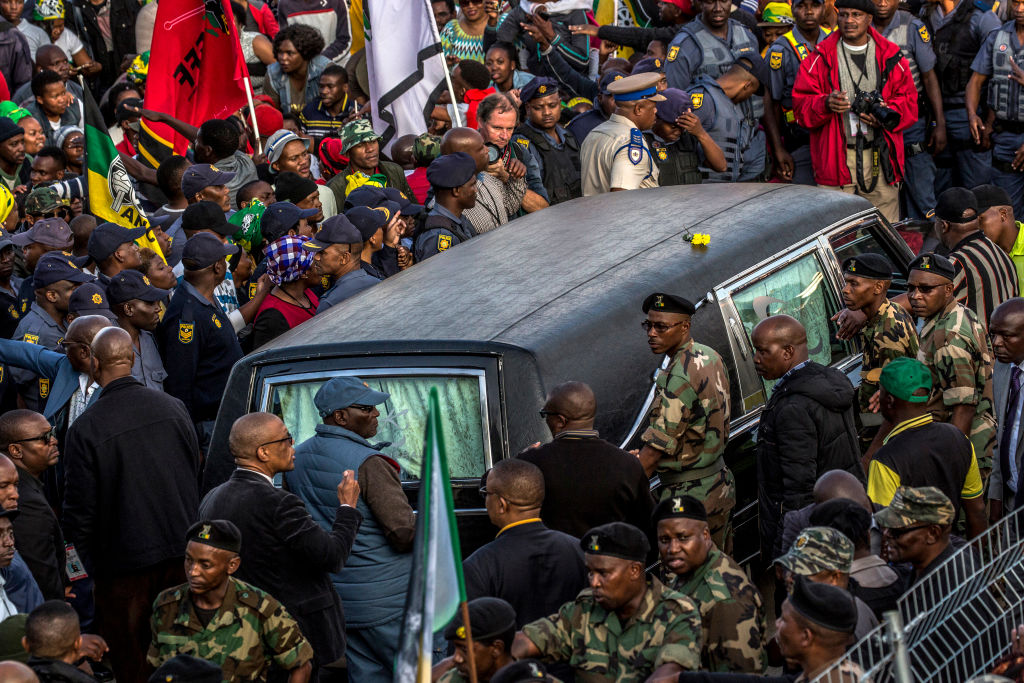
The body of Winnie Mandela is returned to her home in Soweto on Friday.Charlie Shoemaker / Getty
First, the facts: regardless of what Euro-American pundits or obituary writers conclude about Winnie Madikizela-Mandela or what some white (and some black) South Africans say around braais, she was a hero to the majority of South Africans, and still is. Just witness the spontaneous outpouring of visitors and vigils at her home in Soweto and around the country; look at the tens of thousands who attended her state funeral earlier today.
Various people and political movements have long appropriated Winnie Mandela as a symbol. Her death intensifies this. For a long time, depending on your point of view, Winnie Mandela served as an extreme militant or radical liberationist. She was contrasted with Nelson Mandela’s “reasonable,” conciliatory stance towards whites and capital at the end of apartheid. Such comparisons are now — as they were then — unhelpful. They also serve conservative ends. Those who make them conveniently forget that Nelson Mandela went to prison for advocating armed struggle.
While some headlines sought to reduce Winnie Mandela to “Mandela’s former wife,” she was a major leader of the struggle in her own right and developed a political identity independent from her former husband. It is also the case that — despite the African National Congress (ANC) leaders now lining up to eulogize her — many in the organization never liked her, knew what to do with her, or were long at odds with her brand of radicalism.