An Attack on Sex Workers
FOSTA supporters say the bill would crack down on illegal sex trafficking. But the real victims would be sex workers.
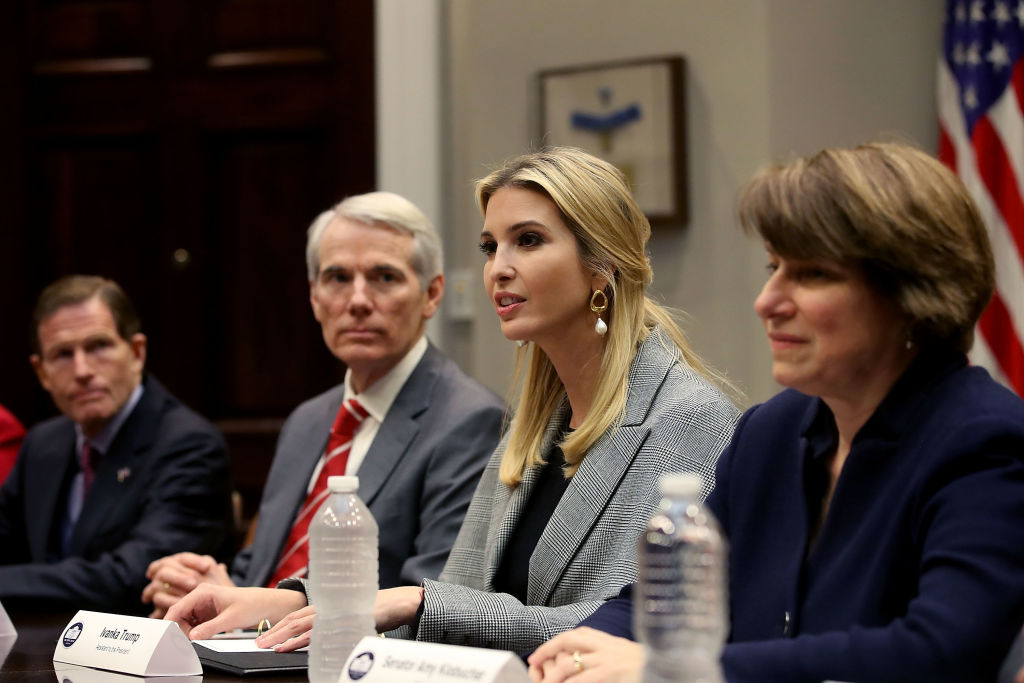
Ivanka Trump participates in a bipartisan roundtable discussion on sex trafficking with members of Congress and the private sector in the Roosevelt Room at the White House on March 13, 2018 in Washington DC.Mark Wilson / Getty
On March 23, Craigslist decided to do away with personal ads. Then, Microsoft announced plans to make it illegal to get naked on Skype. The company is also out to ban any “offensive language” from Xbox and Office. Reddit has changed its content policy as well: now the site explicitly forbids users from advertising paid services including “physical sexual contact” on its platform. And it’s not just the big names that are making such urgent amendments. Pounced.org, a dating website for those into Furry Fandom, just shut down.
While some companies acknowledge it and some don’t, this trend appears to be spreading in anticipation of a sweeping piece of federal legislation that could soon become law. Enter FOSTA, or the Fight Online Sex Trafficking Act. The bill intends to amend Section 230 of the Communications Decency Act (CDA), which prevents online intermediaries from being held liable for their users’ actions. The legislation was passed by the House of Representatives in late February. By late March, the Senate had voted to advance the measure (SESTA). It just needs Trump’s signature to be passed. Needless to say, tech companies and internet freedom activists aren’t pleased.
Section 230 has governed the internet for the past twenty-two years, which is why major platforms like Craigslist, Reddit, and Microsoft have been able to host content that toes the legal line. But that kind of immunity became a significant point of contention in 2016, when the CEO of an online classifieds-ad company called Backpage.com was arrested for helping facilitate child sex trafficking. A judge eventually dismissed the case, ruling that Section 230 ultimately protected the company. The law prevented the prosecution from going after the company, so politicians decided to go after the law instead.