The Mirage of Pension-Fund Activism
Pension-fund activism is a dead-end. Organizing and empowering workers is still the only way to revive the labor movement.
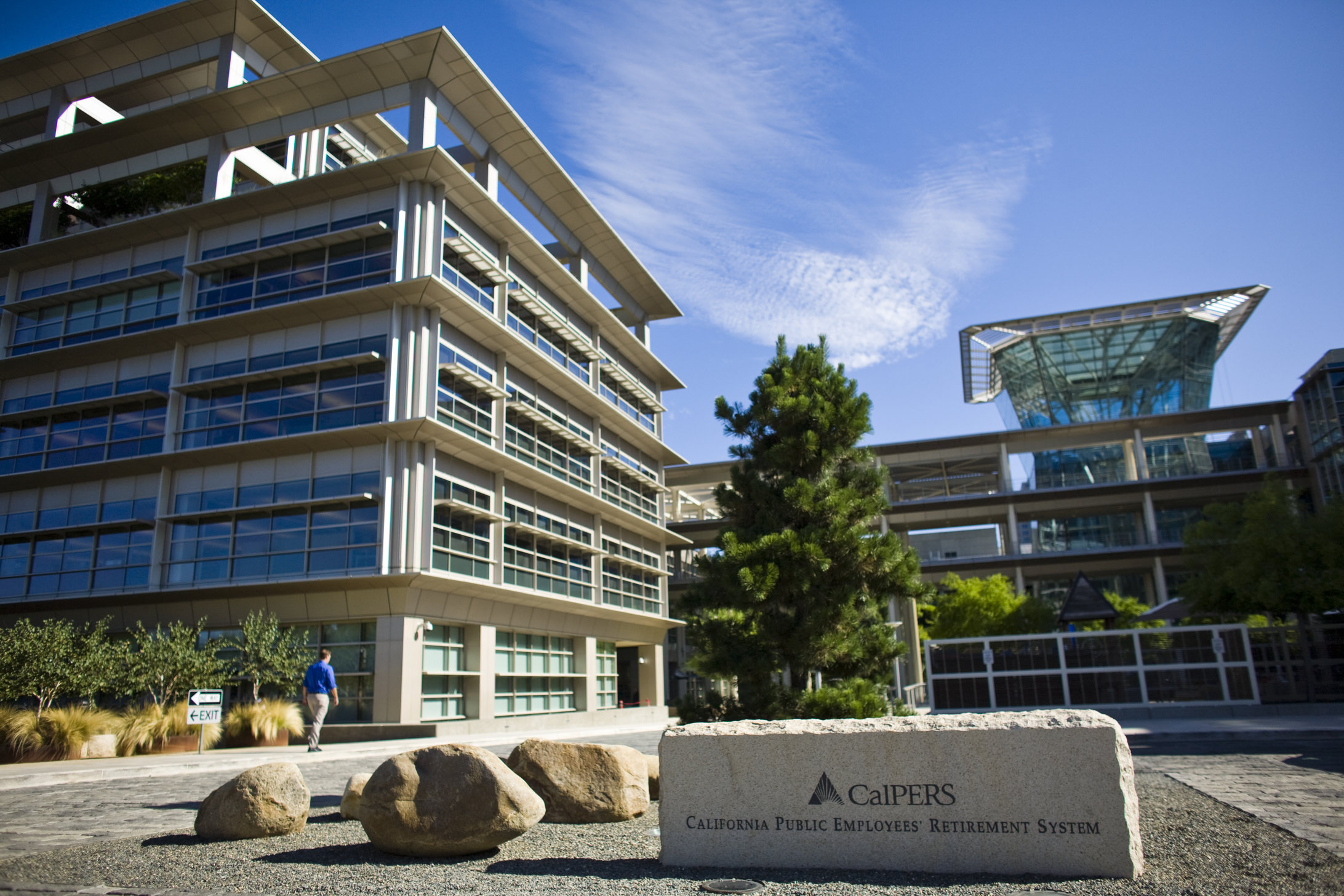
The California Public Employees’ Retirement System (CalPERS) building in Sacramento, CA, July 21, 2009.Max Whittaker / Getty
In her 2016 book No Shortcuts: Organizing for Power in the New Gilded Age, union organizer Jane McAlevey argued that unions have repeatedly and fruitlessly searched for quick fixes to the long decline of organized labor. This hunt for a magic bullet has diverted unions from investing in the single enduring and indispensable source of working-class power: deep organizing to build workers’ collective capacities for struggle.
One alluring shortcut to renewing labor’s strength has been to try to exploit the growth of pension funds. In Canada, the United States, and other countries, these pools of workers’ retirement savings have grown, even as union density has fallen. Today, pension funds alone hold assets of nearly $US 41 trillion worldwide, and are growing at 6 percent a year; Canada itself is home to $US 1.8 trillion in pension-fund assets and some of the biggest pension-fund investors in the world. These funds invest in every imaginable asset around the planet — not just stocks and bonds, but schools, hospitals, airports, municipal water systems, farm land, coal deposits, and other myriad assets.
The Rise of the Working-Class Shareholder: Labor’s Last Best Weapon is only the latest in a long line of books urging unions to harness pension funds’ financial clout to advance workers’ interests. The book’s author, David Webber, is a professor in the Boston University Law School, with a deep knowledge of pension law and close ties to the US union pension-activist community. Webber is firmly in labor’s camp, and is a sharp critic and opponent of the US right wing. But the book’s approach epitomizes McAlevey’s argument that the search for shortcuts is a dead end.