The Medicaid Patchwork
In theory, Medicaid is America’s national health insurance program for the poor. But there’s nothing “national” about it — and the poor suffer as a result.
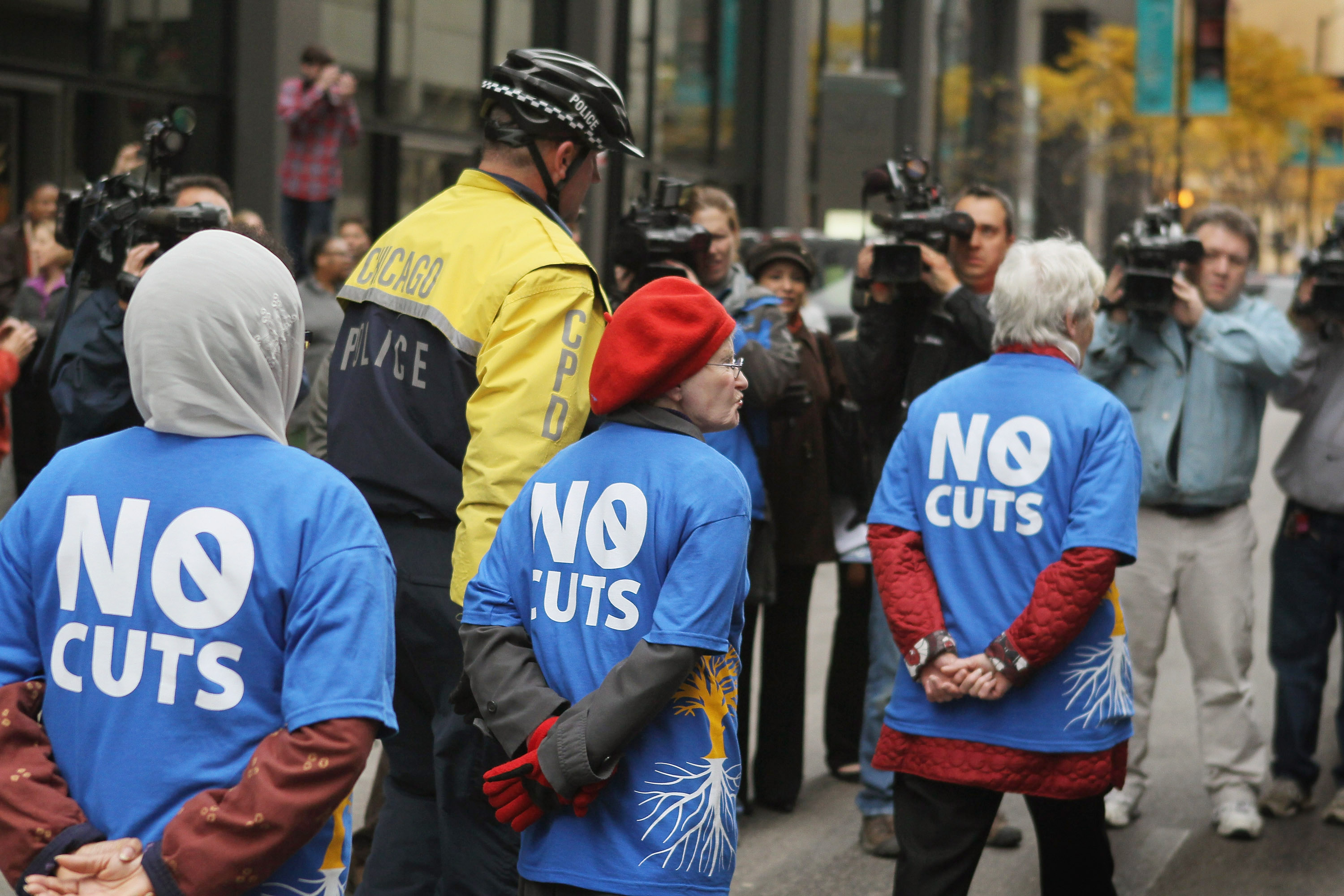
Demonstrators are led away by police during a protest against cuts to federal safety net programs, including Social Security, Medicare, and Medicaid on November 7, 2011 in Chicago, Illinois.Scott Olson / Getty
Medicaid is the nation’s primary source of health insurance for low-income people. The program has saved millions of lives, but it fails to fully realize its original promise of providing poor Americans across the nation with access to quality health care. Although we often talk about it as if it were a single social program, Medicaid is actually a constellation of discrete state programs, funded with federal money.
Because the federal government only standardizes state social Medicaid policies to a limited extent, some state programs are far more threadbare than others. As a result, a Medicaid enrollee in Georgia, for instance, might have diminished access to care simply because of where they live, and many beneficiaries are compelled to navigate under-resourced bureaucracies to claim their benefits, often to discover that the care they need isn’t covered in their state.
Jacobin staff writer Meagan Day spoke to Jamila Michener, author of Fragmented Democracy: Medicaid, Federalism and Unequal Politics about why geographic health inequality persists.