When Polish Women Revolted
Looking back at the struggle that, two years ago, defeated a historic anti-abortion bill in Poland.
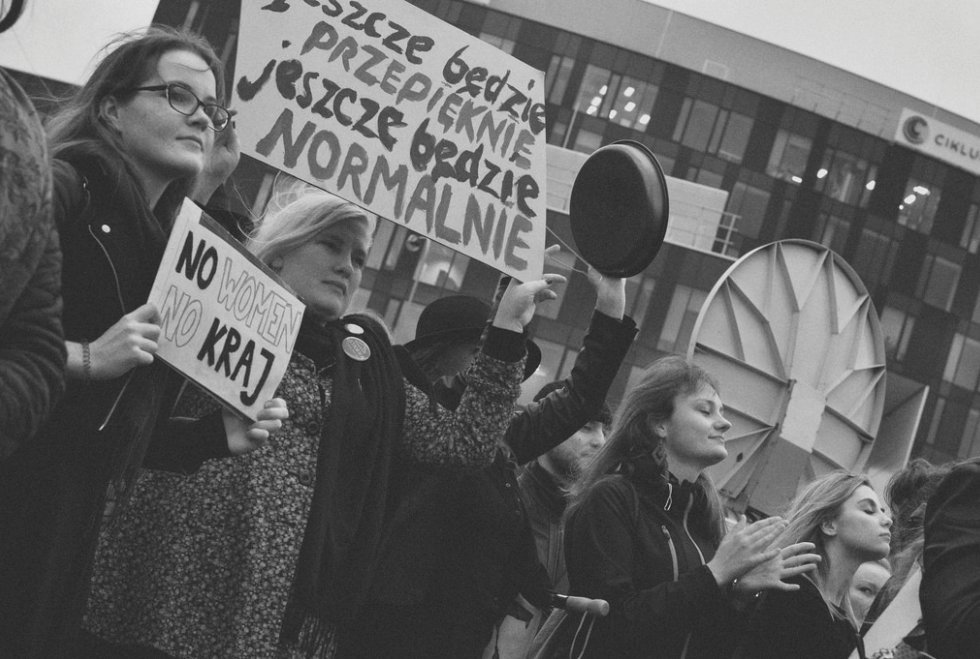
A protest for reproductive rights in Poland in 2016. Sophie in ‘t Veld / Twitter
Adrienne Rich once commented on the “blanketing snow” that comes to “drift [ . . . ] over radical history.” Such has been the fate of many of Poland’s historical women’s movements; the sisterhoods of the mid-twentieth century, the communist and anarchist activists, the lesbian and queer radicals that never made it into the history books. Today, thanks to the strength of Poland’s right, this may also be the fate of 2016’s “Black Monday” movement, in which thousands of Polish women revolted against draconian anti-abortion measures. That is, unless the Left defends the space opened up by the revolt.
Before 2016 women’s and feminist organizations did exist in Poland, mostly in the form of gender studies programs in various universities and a hundred nonprofits dedicated to the issue (in 2003 some five thousand organizations mentioned women’s rights in their policies in some form). They focused mostly on abortion, reproductive justice, and violence against women. However, the majority of organizations were located in big cities or towns, and their members were limited to the urban, educated middle-class.
It wasn’t until 2016, when the right-wing Law and Justice Party (PiS), led by Jaroslaw Kaczynski, introduced a bill that would have made abortion completely illegal that the women’s movement was able to break out of this isolation. Abortion is legal in Poland only in three cases: when pregnancy is the result of rape, when the fetus shows risks of severe damage or illness, and when the life of the woman is endangered. Unfortunately, even under these conditions women often do not obtain permission to terminate pregnancies, which leads them either to illegal abortions, in Poland or abroad, or to face serious risks to give birth anyways. Official statistics count only around 100 legal abortions per year in Poland; but, according to feminist organizations, some 140,000 illegal ones are additionally carried out. The PiS bill would have made abortion illegal even in these exceptional cases. Additionally, it would have criminalized not only women who sought abortions, but their doctors and anyone else who assisted them, allowing them to be sentenced to up to two years of jail time.