The Feminist Case For Single Payer
It's time to take health care away from the power of bosses and spouses.
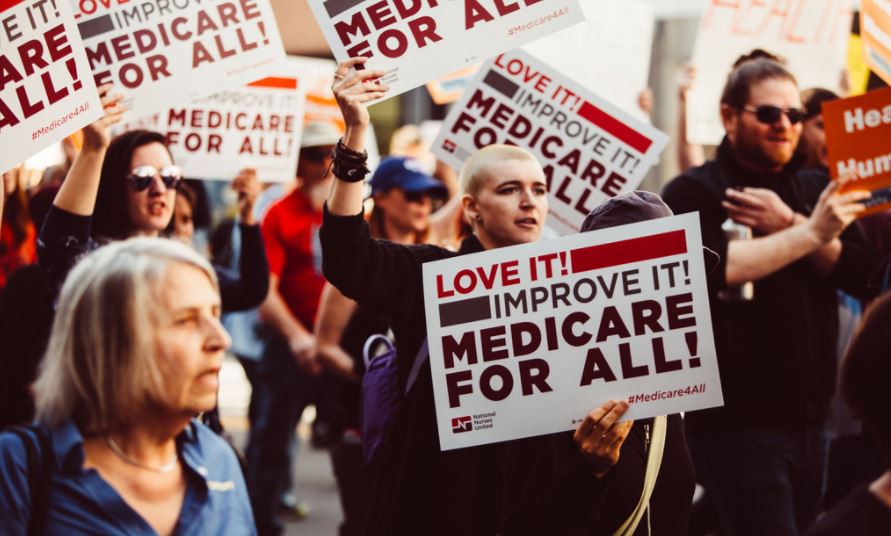
A Los Angeles Medicare for All rally in February 2017. Molly Adams / Flickr
In the spring of 1969, a dozen feminists gathered at a women’s conference in Boston and came to a sober conclusion: their encounters with the United States health-care system had been overwhelmingly negative. They felt unsettled by doctors, alienated from their bodies, grifted by fees, and altogether powerless to navigate an industry they believed objectified them just as popular culture did.
The conference launched a years-long project, with each participant delving into some aspect of anatomy, sexuality, or society related to women’s health. The result was a self-published volume of essays called Women and their Bodies, which the Boston Women’s Health Book Collective used to provide women with a resource produced from their own perspectives and experiences.
Within a few years, the landmark feminist booklet was re-dubbed Our Bodies, Ourselves, released by Simon and Schuester, and sold millions of copies. In 2012, the Library of Congress named it one of the most significant works in American history. In recent years, it has inspired Trans Bodies, Trans Selves, which similarly seeks to be a health-care guide “by and for” the transgender community.