Neoliberals Used to Call Themselves New Democrats
A history lesson for Jonathan Chait.
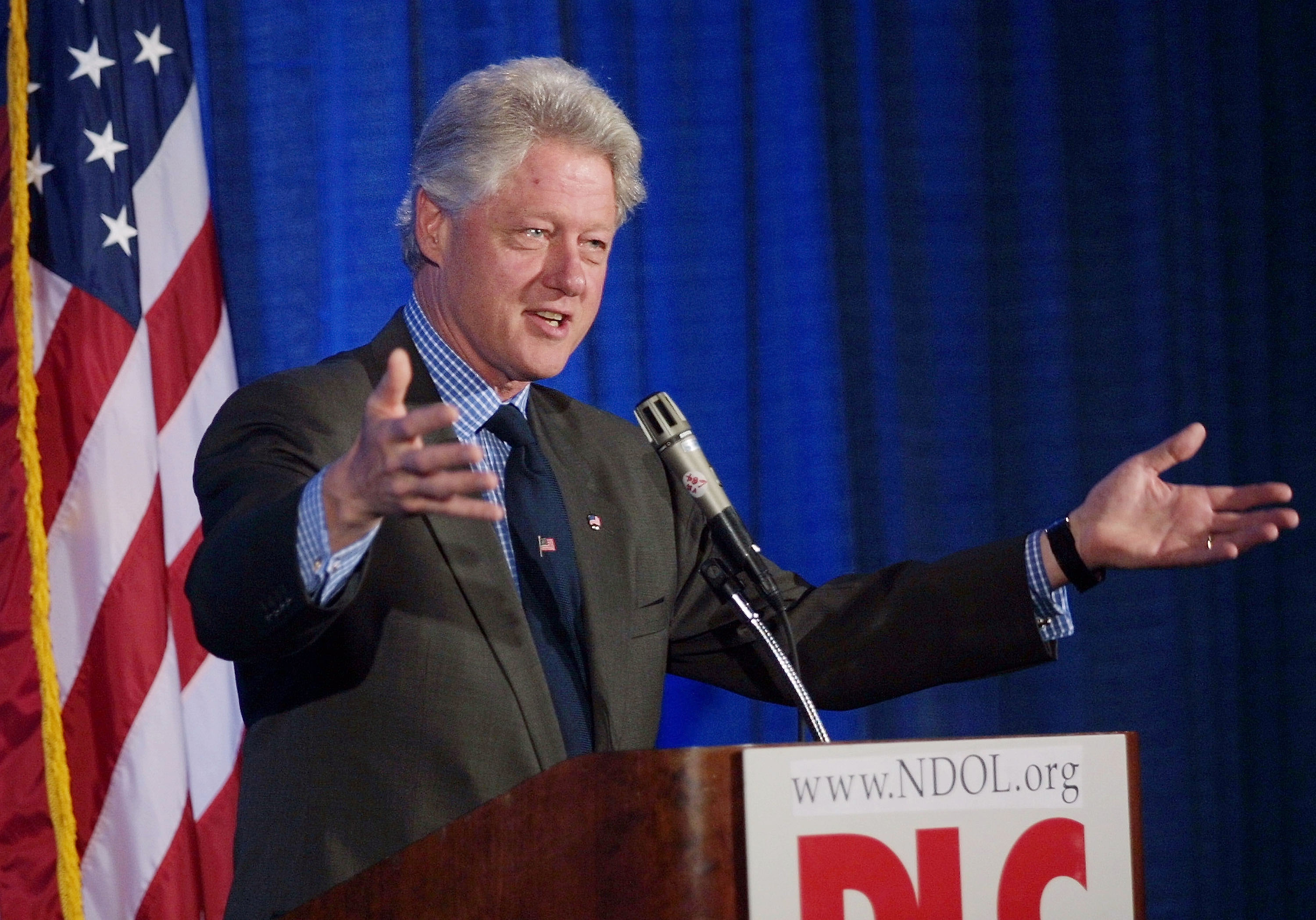
Former president Bill Clinton speaks during the awarding of the 2002 Democratic Leadership Council Clinton Center Award for Leadership and National Service on April 11, 2002 in Washington DC. Manny Ceneta / Getty Images
Jonathan Chait is mad that people call him a “neoliberal” and so insists that the word has no meaning and that it does not describe a real political change that occurred a few decades ago. Many have already explained how silly this feint is, but I would like to add two other points.
First, potent words get stretched in popular discourse to the point of incoherence and contradiction all the time. It is one of the great paradoxes of language that words that pique people eventually get annihilated into meaninglessness through overuse. There is nothing special about “neoliberalism” in this regard. The same could be said of words like “intersectionality,” “structural,” “patriarchy,” and dozens of similar words that had fairly clear meanings at one point but that you can also find people using in a lot of different and conflicting ways in the discourse.
Second, if we can put aside the word “neoliberal” for a second, Chait’s main claim here is that nothing changed about the Democratic Party and that leftists are lying or delusional when they say it did. What’s weird about this move is that Democrats themselves claimed at the time that they were changing. They even called themselves “New Democrats,” you know like “Neodemocrats,” or maybe even “neoliberals.” Perhaps the self-proclaimed New Democrats, which included Bill Clinton and Al Gore, among others, were lying about changing, but we should at least take seriously the proposition that they were sincere and actually intended, as they claimed, to shift the party toward the center and away from the left.