A New Democracy or a New Oligarchy?
Recent elections in Nepal may further entrench divisions that have stalled democratic progress for a decade.
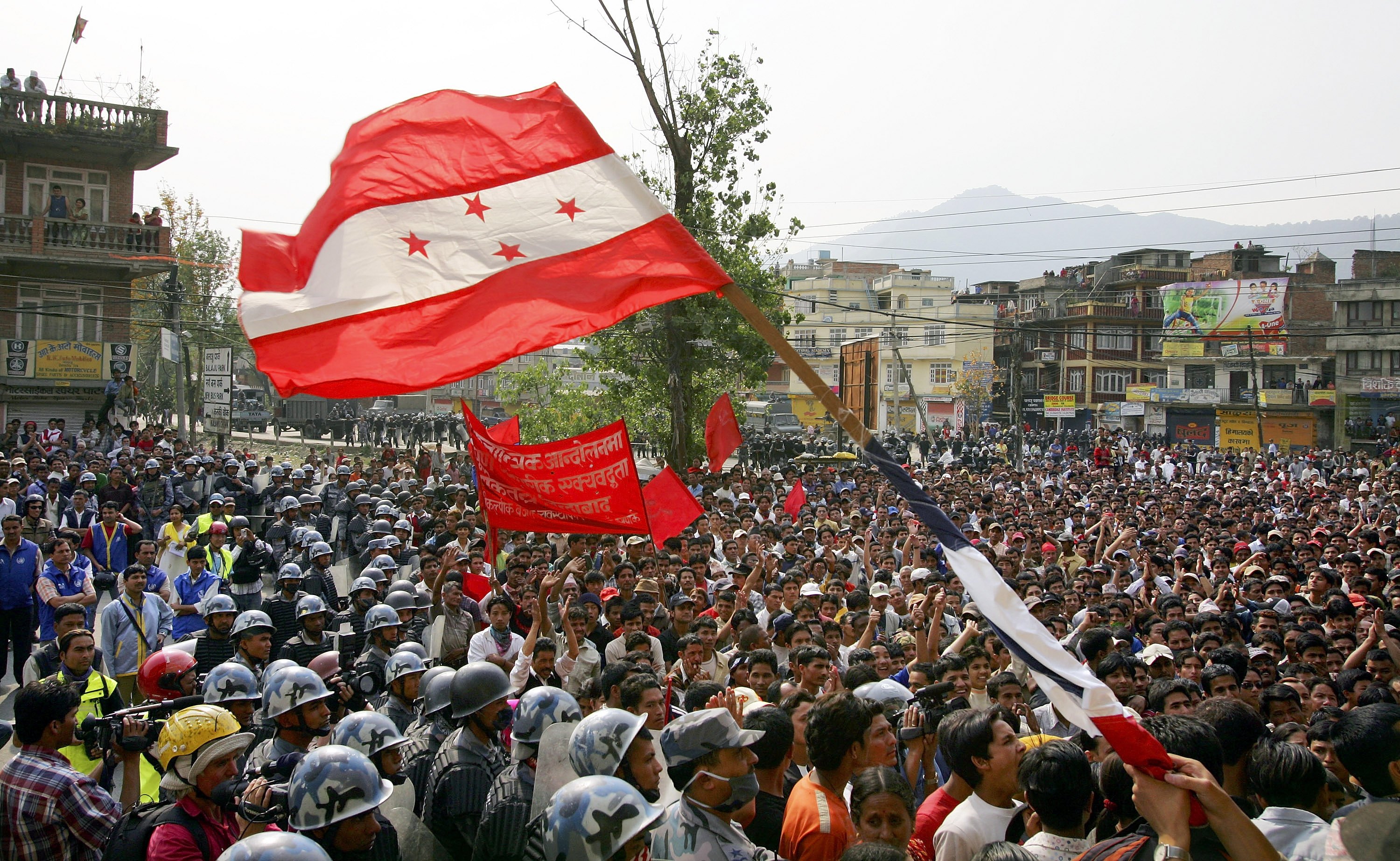
Nepalese protesters gather during a demonstration against King Gyanedra?s Monarchy April 16, 2006 in Kathmandu, Nepal.Paula Bronstein / Getty Images
Between May and September of this year, Nepal held its first local elections in twenty years. Soon, they will elect a new parliament and form new provincial councils, which were created after the overthrow of the monarchy and the establishment of a federal republic in 2007–8.
The local elections unfolded in three stages: three of the seven new federal provinces voted on May 14, 2017; three more followed suit on June 14, and the last province went to the polls on September 18.
The turnout in all seven provinces was high, indicating the enthusiasm with which the Nepali electorate greeted this long overdue opportunity to make their views known to the parties and their candidates. The involvement of the Madhesi parties, which represent the people of Nepal’s southern plains, was particularly important, given their effective exclusion from power in Kathmandu.