Nationalize the Pubs
One hundred years ago, Britain nationalized hundreds of its pubs — and invented a better drinking culture.
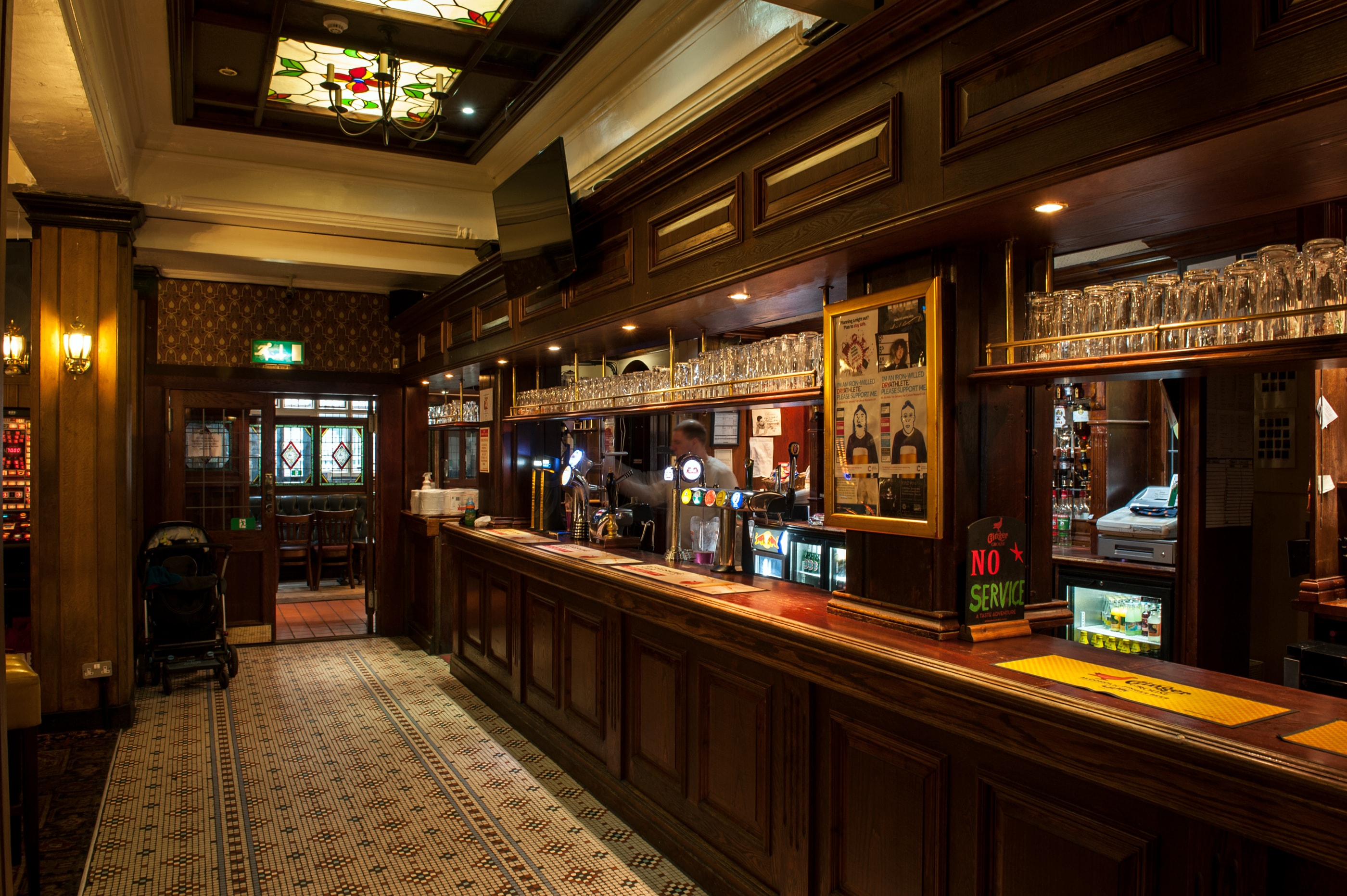
The interior of the Cumberland Arms, a state-managed pub in Carlisle.The State Management Story
A hundred years ago, at the height of World War I, the British government faced a dilemma. As the slaughter on the Somme reached its climax, a vast munitions factory had been built on the border between England and Scotland, on an area covering more than fourteen square miles. Some 12,000 workers, plus thousands more builders and a military guard, were drafted into the area.
Most were billeted in townships near Gretna on the Scottish side of the border, but only a short train journey from Carlisle, a city in northern England. With little else to amuse themselves, Carlisle’s pubs became a home for the workers and their unusually generous pay packets, every evening swelling a native population of just 50,000. At Boustead’s, a watering hole near Carlisle station, they would line up 500 whiskies along the bar, ready for the first after-work customers off the train.
By the summer of 1916, convictions for drunkenness in the town had soared six-fold. But, of course, it wasn’t disorder that primarily concerned the authorities. When future prime minister David Lloyd George, then munitions minister, declared that “We are fighting Germany, Austria and drink, and as far as I can see, the greatest of these three deadly foes is drink,” he was referencing the widespread view that the effects of alcohol were threatening production.