A Shift to the Right?
Commentators and politicians have taken a rightward shift in German society for granted. But the reality is much more complicated.
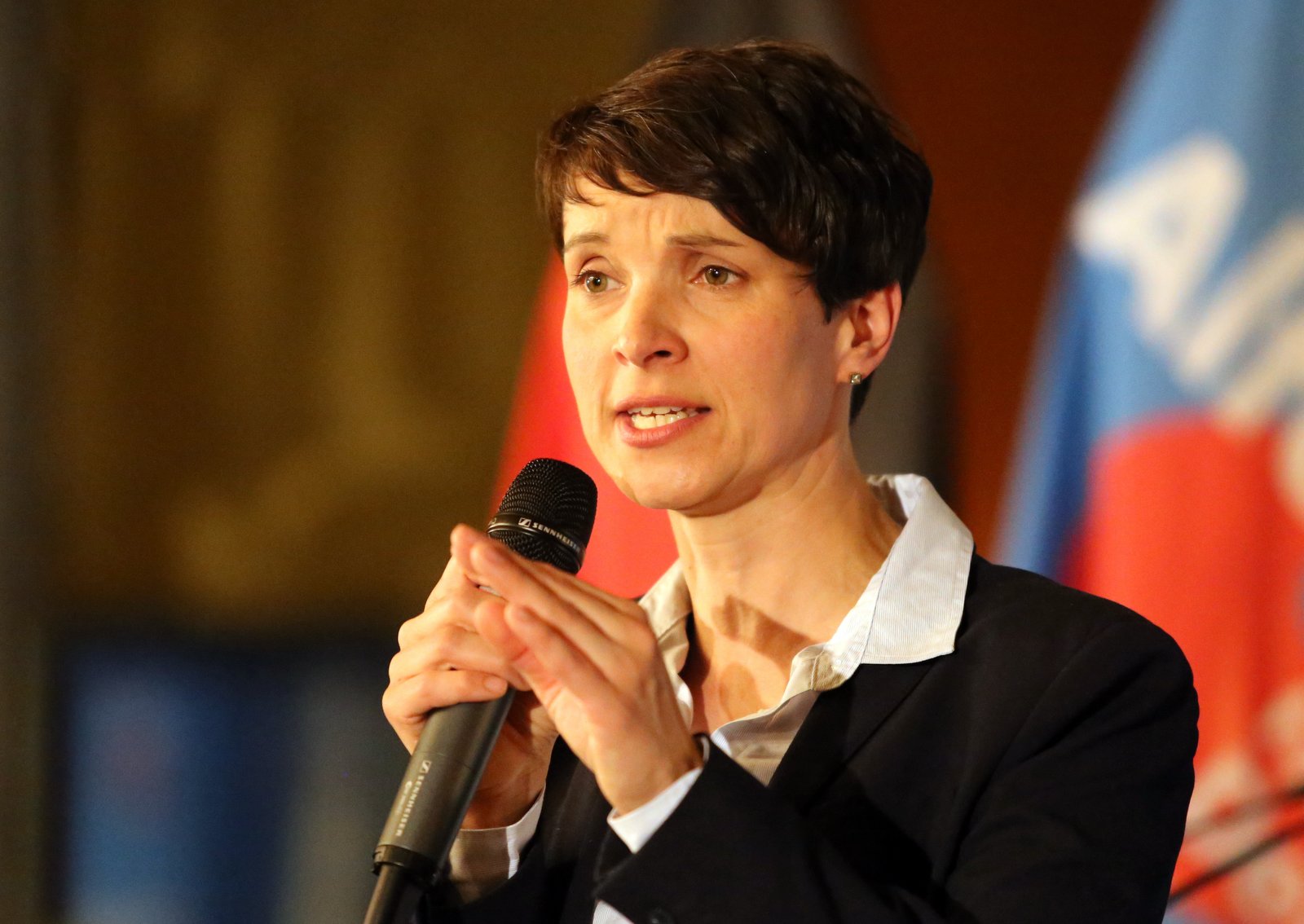
Frauke Petry, chairperson of the far-right Alternative for Germany (AfD), at an AfD event on May 13, 2016.Michael Lucan / Wikimedia
On September 24, Germany will vote in what will is one of the least interesting and yet most important electoral contests since the Federal Republic’s founding in 1949.
The campaign has been excruciatingly boring. Most observers take Angela Merkel’s victory as a foregone conclusion. The televised debate between the current chancellor and the Social Democratic Party’s (SPD) lead candidate Martin Schulz on September 3 got mixed, but altogether negative, reviews, ranging from pure indifference to bewilderment and anger at the candidates’ painfully inoffensive style. This reaction is all the more remarkable given that German politics isn’t known for its confrontational style.
Indeed, while the rest of the European political landscape is marked by upheaval and polarization, in Germany, the center is set to triumph, propping up the hopes of liberal commentators desperately awaiting a liberal fight back. But this picture is misleading: these elections are taking place in a period of growing uncertainty.