The Hard Green Line
The Canadian Green Party's fight against pro-union legislation shows the dangers of an environmentalism that's not rooted in the working class.
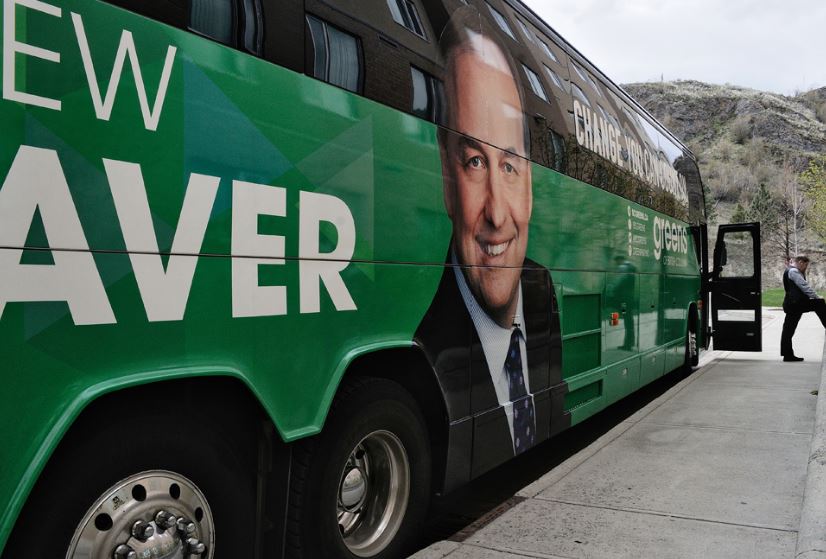
An Andrew Weaver campaign bus in British Columbia. Twitter
In May, British Columbia had its first minority government result since 1952, with the Liberal Party — in power since 2001 — falling one seat short of the forty-four necessary to reach a majority. The New Democratic Party won forty-one electoral districts, or “ridings,” and the Greens picked up three seats, the most it has won in any provincial or federal election since it’s founding in 1983 — leading to the BC Greens dubbing themselves the first Green Caucus in North America.
Though the regional Green Party fell one seat short of the four necessary to gain official party status in the legislature, the seats they did win were pivotal, given the minority result. Through those three seats, the Greens controlled which of the two major parties could push past the forty-four seats necessary to form a government.
The NDP is a social-democratic party, with labor unions’ backing. The Canadian Conservative Party is not on the map in British Columbia, which means that capitalists and conservatives have largely found their home in the Liberal Party.