“Officer-Involved” Obfuscation
Police use bloodless language like "officer-involved shooting" to cover up the blood on their own hands.
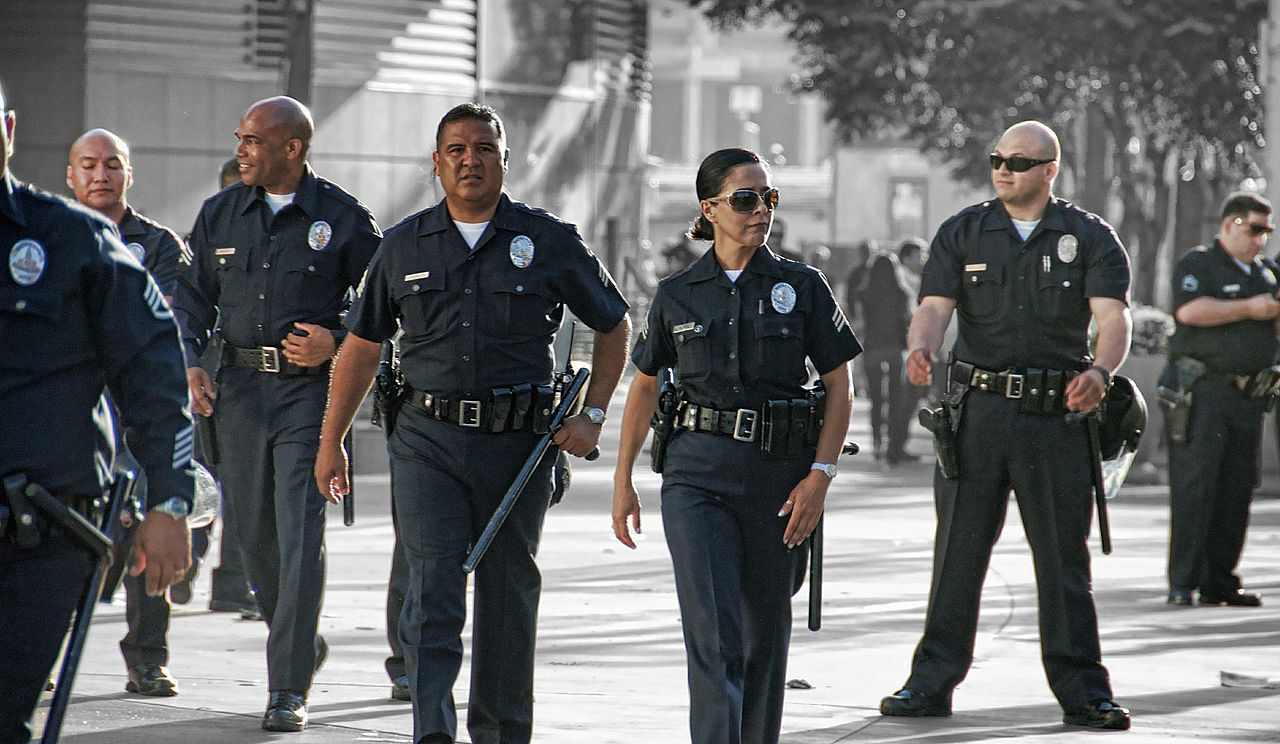
A group of LAPD officers near the Staples Center in Los Angeles, California, in 2010. (Chris Yarzab / Wikimedia Commons)
When Eula Mae Love left the tiny, segregated town of Varnado, Louisiana as a teenager in 1953, she was beating a familiar path west, or so she must have hoped.
She traded a small southern town, seventy miles north of New Orleans, where mules tilled cornfields and a single street divided white from “colored,” for the cars and freeways of the cosmopolitan California metropolis. Love graduated from Compton High School and worked in the factories of Anaheim; she married, raised three daughters, and bought a small house in Watts, Los Angeles.
Back home, in 1965, nightriders murdered Varnado’s first black deputy sheriff — the kind of racist terror that Love and her family had fled. But contrary to the familiar plot, Southern California was no land of milk and honey.