We Used to Fight Inflation With Boycotts
In 1973, hundreds of thousands of women took to the street to protest dramatic increases in the cost of meat. Grocery prices are growing at a much faster rate than they were 50 years ago. Why don’t we do the same?
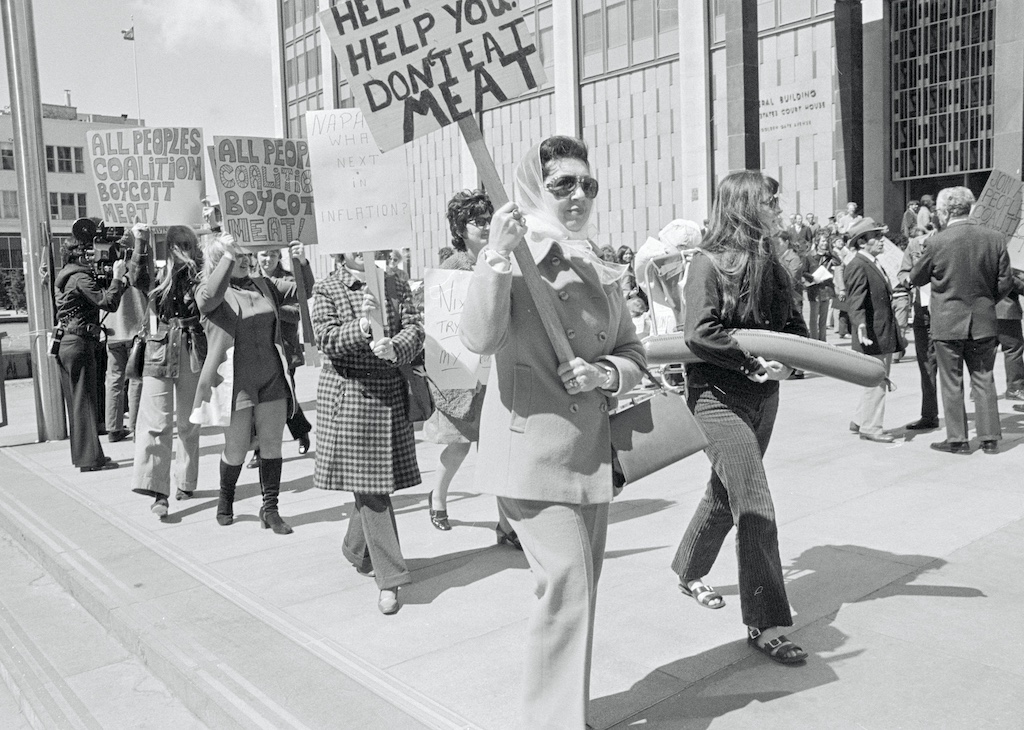
Demonstrators marching in protest of the high price of meat in San Fransisco, California, on March 29, 1973. (Getty Images)
It was a revolution of peanut butter sandwiches.
Hundreds of thousands of American women — mostly suburban, middle-class mothers who did not work outside the home — boycotted the meat industry from April 1 to April 8, 1973. They refused to buy beef, pork, and lamb, setting the table instead with “onion quiche, vegetable chow mein with cashews and lots of cheese and eggs,” according to the New York Times. They held rallies and passed out meatless menus with what the paper called “genteel militance.” The protests made national news, earned a political cartoon on the cover of Time magazine, and left meat magnates fuming.
That year, meat prices were about as bad as they are now. In March 1972, ground beef cost sixty-nine cents per pound, or the equivalent of $5.03 in November 2024. (In November 2024, ground beef cost $5.63 per pound.) As one shopper told the Times: “I’m not buying. I’m just looking at the prices and laughing.”