South Korea’s Repressive Laws Deny Workers Their Rights
The ousting of a popular government official in Seoul last month was linked to Korean laws that bar many workers from engaging in political activity. A draconian system known as the “prosecutor republic” helps conservative elites maintain their power.
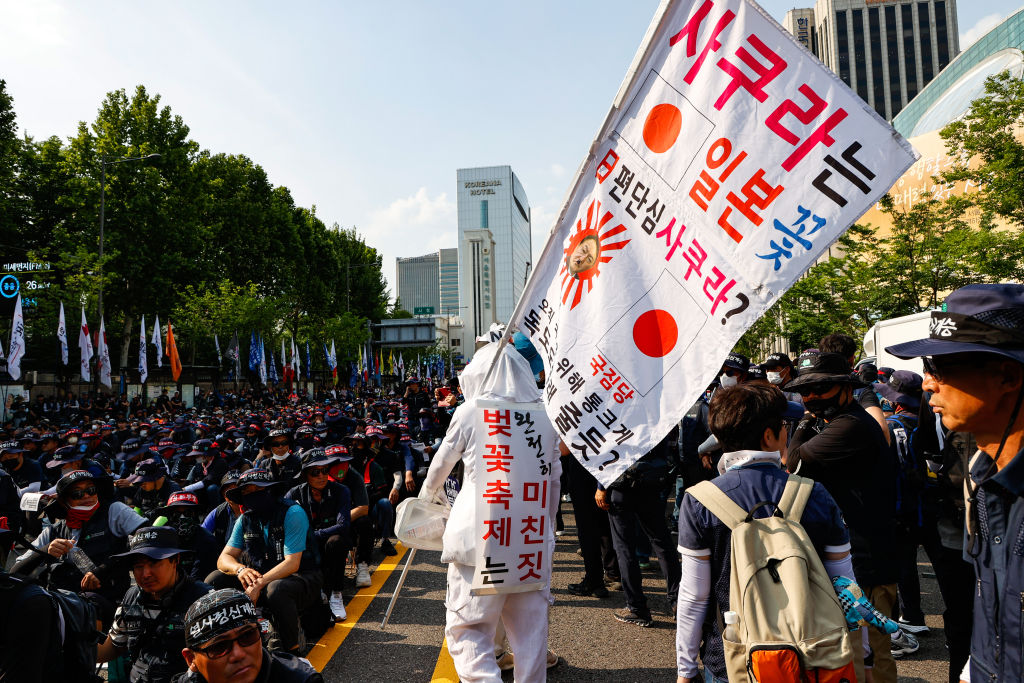
Members from the Korean Confederation of Trade Unions (KCTU) participate in a protest against of the government’s labor policies on May 31, 2023, in Seoul, South Korea. (Chris Jung / NurPhoto via Getty Images)
A ruling by South Korea’s Supreme Court in early September upheld a suspended sentence against Cho Hee-yeon, the popular superintendent of Seoul’s Metropolitan Office of Education and a progressive sociologist and civil society leader.
Cho is known for his efforts to expand free school meals, protect student rights, and limit private high schools. The ruling forced him to resign from his position, one akin to education minister for a city of nearly ten million people.
The removal of Cho is an injustice that speaks volumes about the present-day Korean power structure. Decades after the formal end of military rule, Korean workers still face stifling legal constraints on their freedom to engage in political activity. This is one of many obstacles facing the Korean left as it struggles to maintain a presence in national politics.