Britain’s Tory Party Has Suffered Its Worst-Ever Defeat
The big story of this month’s UK election was a Conservative meltdown, while support for Labour barely rose at all. Along with disastrous missteps by Boris Johnson, Liz Truss, and Rishi Sunak, long-term structural factors mean the Tories are in decline.
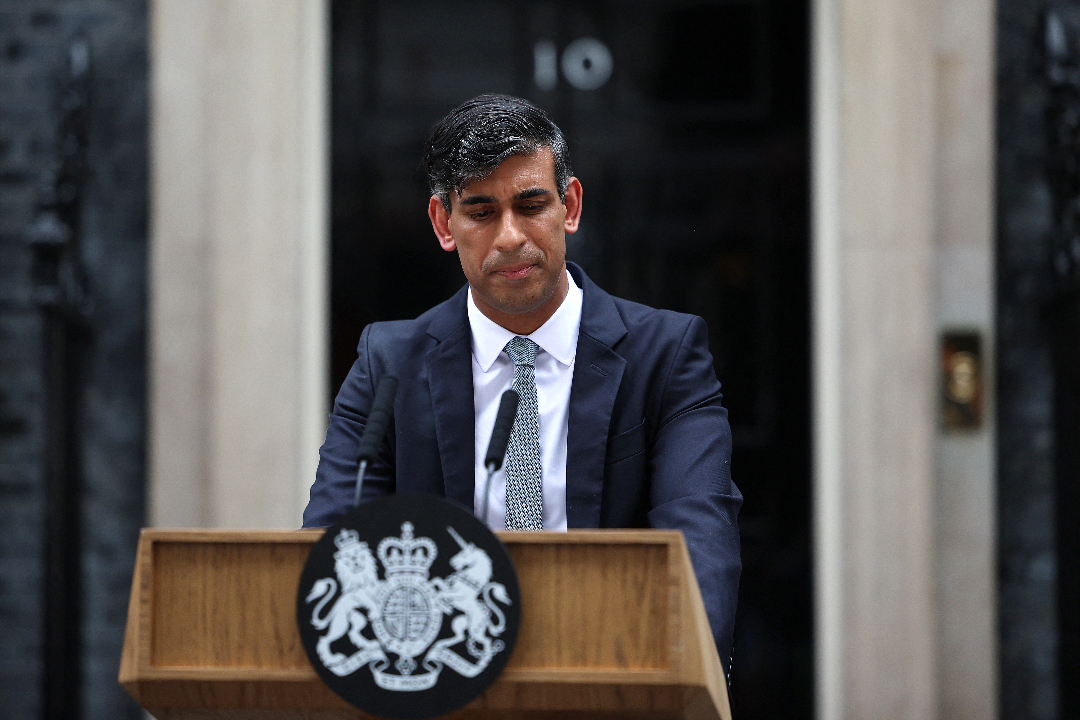
Outgoing British prime minister and leader of the Conservative Party Rishi Sunak delivers a statement after losing the general election, outside 10 Downing Street in London on July 5, 2024. (Henry Nicholls / AFP via Getty Images)
At first glance, the result of the British general election seems like a massive popular mandate for Keir Starmer and the Labour Party. Labour ended up with 411 seats in the House of Commons, while the Conservative Party had just 121. But we have to reckon with the British electoral system, which can give parties a large majority of seats without even a small majority of votes.
Labour will form a government with less than 34 percent of the overall vote. That’s barely 2 percent more than the party achieved with Jeremy Corbyn as leader in 2019, on a much lower turnout. The real story of the election was a Tory collapse. The Conservative vote share dropped by 20 percent, and Nigel Farage’s Reform UK divided the right-wing bloc with its anti-immigrant platform.
Phil Burton-Cartledge is a lecturer in sociology at the University of Derby, and the author of a book about the long-term crisis of the Conservative Party, The Party’s Over. This is an edited transcript from Jacobin Radio’s Long Reads podcast. You can listen to the interview here.