We’re in a Class War. Jane McAlevey Actually Acted Like It.
No one believed in and embodied the labor movement’s transformative power more than organizer, strategist, and writer Jane McAlevey.
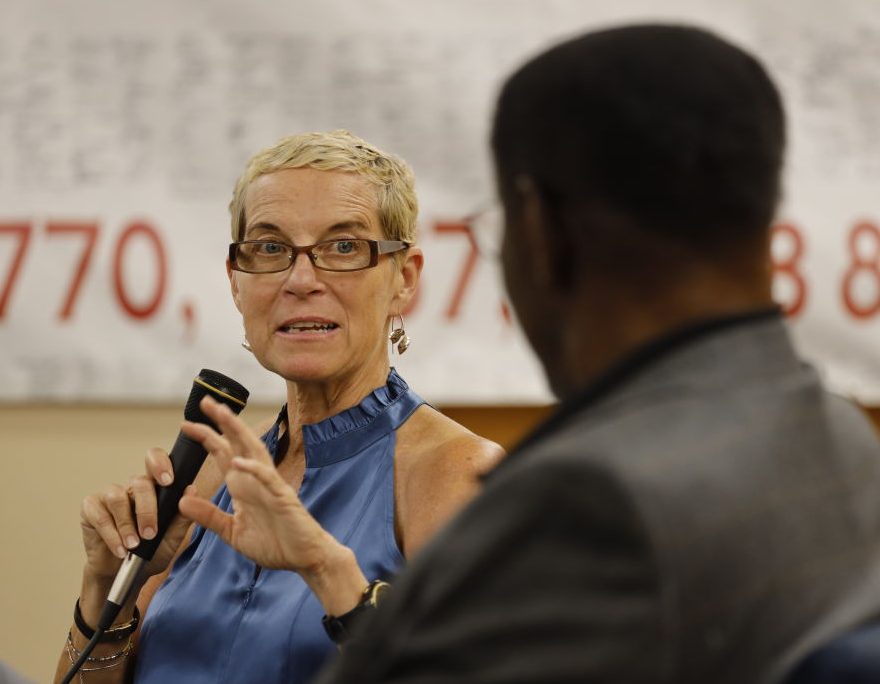
A packed room listens to Jane McAlevey (1964–2024) speak in conversation with Anthony Thigpenn (R) in Los Angeles Thursday, July 13, 2023. (Allen J. Schaben / Los Angeles Times via Getty Images)
Before I ever met Jane McAlevey, I received a package from her in the mail. In addition to a copy of Raising Expectations (and Raising Hell): My Decade Fighting for the Labor Movement, her first book (written with Bob Ostertag), it contained instant coffee and a few other items that one could imagine packing into a rucksack while on the move.
I’d just reviewed A Collective Bargain: Unions, Organizing, the Fight for Democracy, her then latest book. My piece opened with an anecdote about Hosea Hudson, a legendary labor organizer and black Alabama communist in the 1930s, a time when being either of those things put one’s life at risk. Of his rap to new recruits, Hudson said, “We had [to] tell people — when you join, it’s just like the army, but it’s not the army of the bosses, it’s the army of the working class.” I likened Jane to a drill instructor, the book an army manual. If there were any doubt as to whether the comparison was apt, Jane’s care package confirmed it.
We are always in a class war, but sometimes it felt like Jane was one of the few people who acted like it. Urgent, direct, no bullshit: that was Jane, the master organizer and negotiator and communicator and strategist. And she was like this with everyone in her orbit: once you were in, you were to be cared for, looked after, and, fundamentally, organized by her — toward the end of keeping up your strength to not only wage class struggles, but to win (one of her favorite words). Her father was a World War II fighter pilot and progressive politician; the apple didn’t fall far from the tree.