The Labour Party Is Committing Itself to Austerity
In the UK, Labour has committed itself to balancing the books and pledged not to raise taxes on big business or the wealthy if and when it forms a government. If a Labour government abides by these pledges, it will mean reimposing austerity.
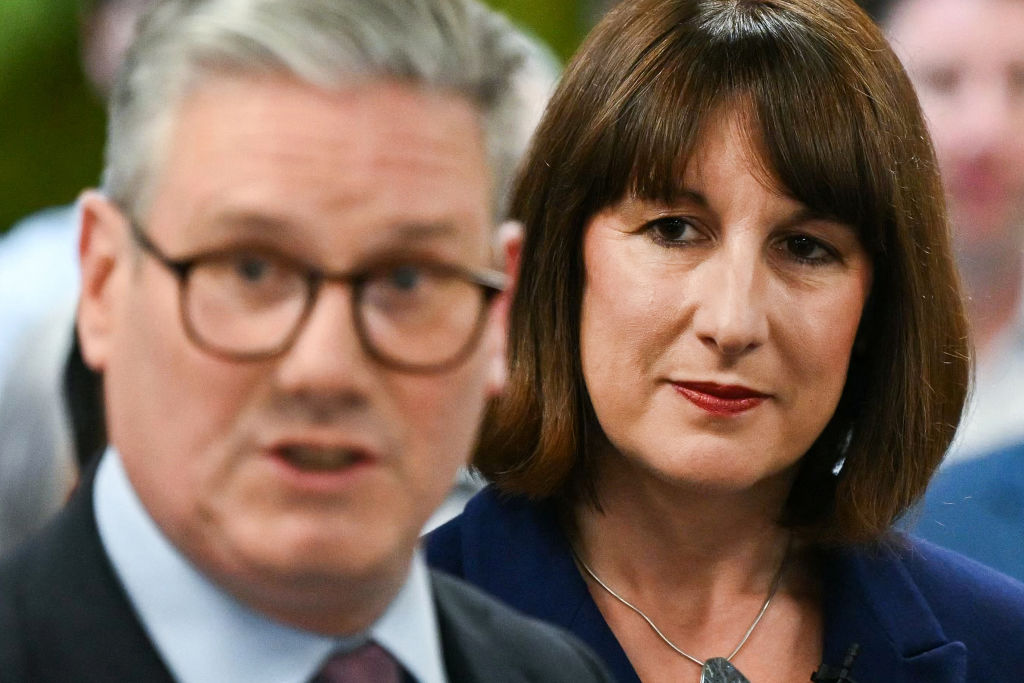
Labour Party shadow chancellor of the exchequer Rachel Reeves (R) and opposition leader Keir Starmer (L) visit Airbus Defence and Space facilities in Stevenage, UK, May 28. (JUSTIN TALLIS/AFP via Getty Images)
Rachel Reeves is once again attempting to strengthen her credentials as a “sensible” manager of the UK’s finances. Labour’s shadow chancellor of the exchequer announced earlier this week that the party would introduce a new fiscal lock, under which any new changes to government spending require a forecast from the Office for Budget Responsibility.
The Labour Party has already tied its own hands when it comes to fiscal policy. The fiscal rule commits the party to balancing the books over the course of its first five-year term, and Reeves has also pledged not to raise taxes on big businesses or the wealthy.
Together, this means that Labour will not be able to increase public spending when it enters office. Barring a dramatic increase in economic growth — an extraordinarily unlikely scenario given the global economic context and Labour’s refusal to increase public investment — this means there will be no more money for public services without cuts to other areas of spending.